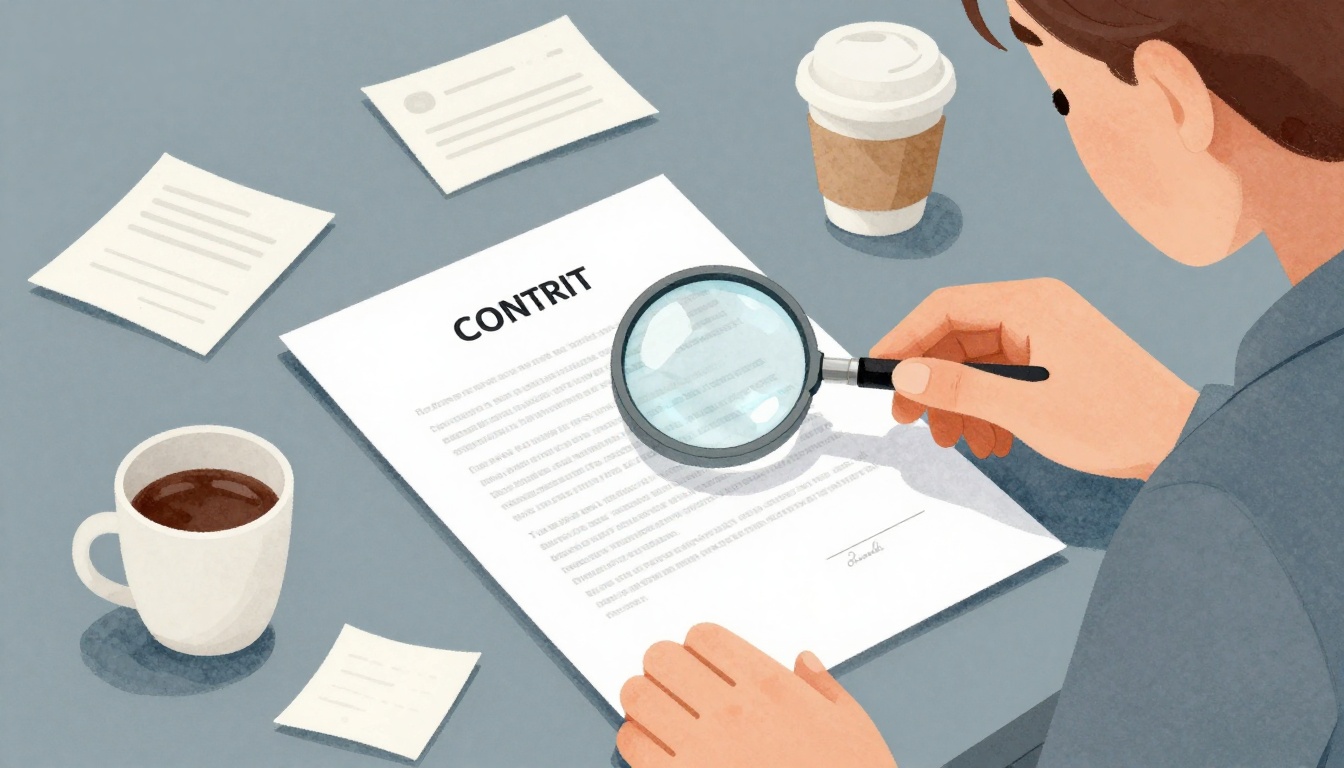
You were in a rush. A salesperson called, a landlord emailed, or a business asked for a signature on the spot. Now you’re wondering how you ended up with a signed contract without reading it closely.
In the US, courts usually expect adults to read what they sign. Still, the law also recognizes that some deals fail because of fraud, duress, big mutual mistakes, or truly unfair terms. Also, some transactions come with special “cooling-off” rights.
If you act smart right now, you can reduce harm and improve your odds. First, keep paying what you owe so you don’t create a new breach. Next, read the contract again with a checklist. Then, check whether you can rescind or cancel. After that, talk to a lawyer and negotiate an exit if legal grounds don’t fully fit.
First Steps to Protect Yourself Right After Signing
The first goal is simple: don’t make things worse while you’re figuring things out. Even if the contract feels wrong, breaking it immediately can give the other side a stronger claim.
Take these steps as soon as possible:
- Stay calm and keep basic obligations going. If the contract requires payments, keep paying to avoid “default” language being triggered.
- Read the full contract now, not later. Focus on payments, due dates, automatic renewal, and any sections that limit your rights.
- Collect everything you have. Save emails, texts, voicemails, ads, and any contract copies you received.
- Don’t sign new papers that expand the deal. If you already did, review the addendum too.
- Put your next steps in writing. When you call, follow up with an email so there’s a record.
The “duty to read” rule is real, but it’s not absolute. Your situation may still fit an exception if the contract was formed unfairly.
Also, don’t rely on verbal promises. If a rep told you the contract “doesn’t work that way,” get specifics in writing before you assume anything.
Stay Calm and Pause Any Extra Actions
Panicking often leads to mistakes. For example, people stop payments right away, or they break the service immediately. Then the other side may claim you breached first.
Instead, pause extra moves like chargebacks or canceling services until you know the contract’s triggers. You can plan your strategy while still performing the basics.
Meanwhile, set a short timeline. For many rescission and cancellation paths, deadlines start quickly after signing or disclosure.
Read Every Word and Spot the Key Details
When you reread the contract, highlight four areas:
- What you must pay, and how often.
- When the deal starts and ends, including renewal dates.
- Termination and cancellation rules, including required notice.
- Rights waivers, like limits on refunds or arbitration clauses.
Also scan for blanks. Some contracts allow the other side to fill missing terms later. If you see any unfilled lines, take photos or screenshots of the version you signed.
Finally, check the “fine print” about notice. If it requires certified mail to one address, email may not count.
Collect All Your Evidence Now
Your evidence shapes everything that follows. Save proof that shows the deal’s formation and context. For example:
- Communications where the other side promised something not reflected in the contract
- Messages showing pressure, threats, or refusal to provide answers
- Any hidden facts you discovered later
- The exact contract version you signed (and any addenda)
If you have witnesses, write down who they are and what they observed. Dates and short summaries help later.
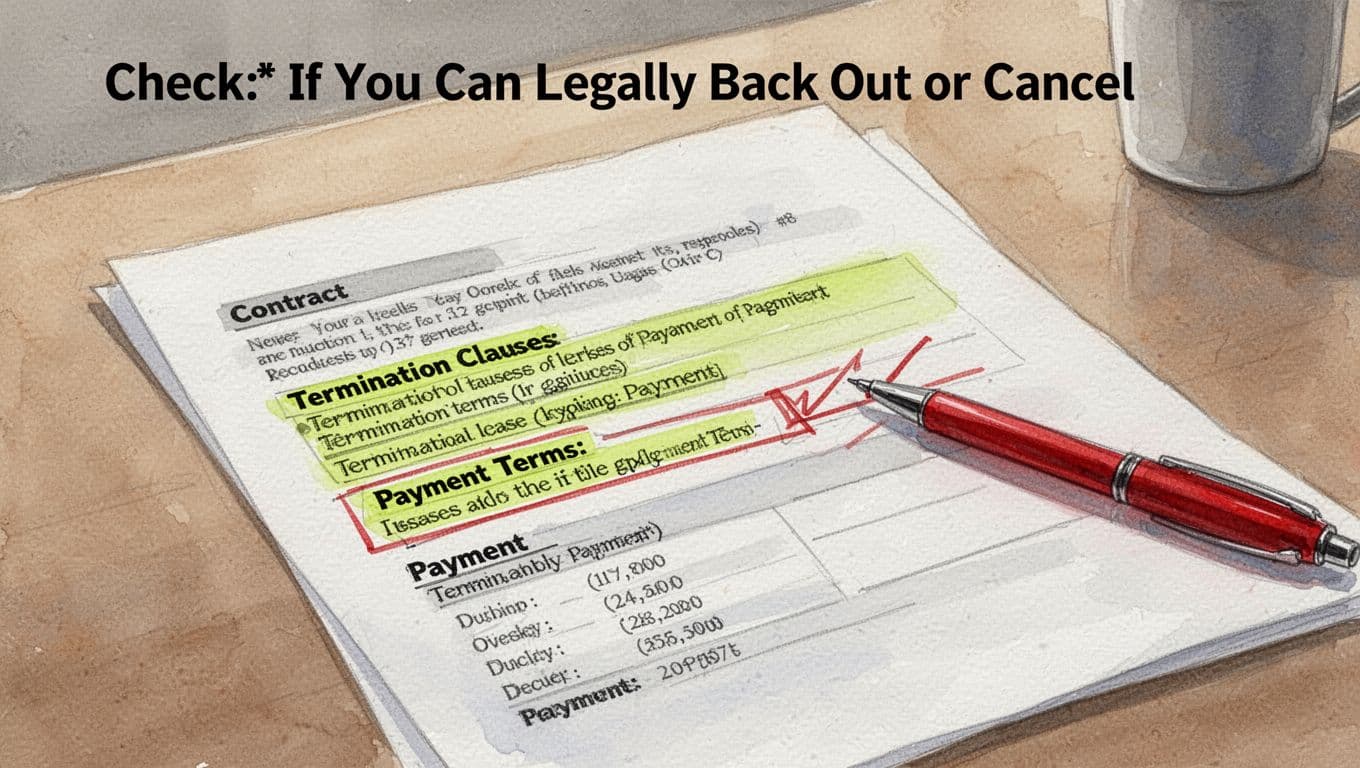
Check If You Can Legally Back Out or Cancel
A signed contract can sometimes be undone. Other times, you can only exit by negotiation. That’s why it helps to sort your options quickly.
Under common US contract principles, rescission may be possible for reasons like:
- Fraud or misrepresentation (lies or key facts left out)
- Duress (agreement made under threats)
- Mutual mistake (both sides shared a major wrong belief)
- Unconscionable terms (terms so one-sided they shock the conscience)
If you want a clear refresher on common rescission grounds, see Contract rescission legal basics.
Common Legal Reasons Your Contract Might Not Hold Up
Fraud usually means intentional deception. Think of a rep who claims you can cancel anytime, but the contract locks you into automatic renewal.
Duress often involves pressure. For instance, signing because someone threatens to call the police unless you sign.
Mutual mistake is rarer. Both sides must share the same big wrong assumption. Unconscionability is also case-specific. A court may look at fees and bargaining power, not just whether you “regret” the deal.
A quick real-world example: a gym contract that hides auto-renewal inside a long clause. If the salesperson clearly promised no renewal and the written terms contradict that, you may have a stronger position.
If you want deeper detail on these grounds, Mistake, Fraud, Duress, and Misrepresentation gives a practical overview.
Know Your Cooling-Off Rights for Specific Deals
Cooling-off rules depend on the deal type. In general, they apply only to certain in-person sales, not most online purchases.
Here are common US patterns (federal rules for some transactions):
| Deal type (common examples) | Typical cooling-off right | Notes |
|---|---|---|
| Door-to-door sales and certain home presentations | 3 business days | Under the FTC Cooling-Off Rule, for many sales over $25 made away from the seller’s store (including some home services). |
| Auto sales at a dealership | Usually none | No broad federal cooling-off period. State variations may exist in special situations. |
| Leases (standard rentals) | Usually no set cooling-off | State landlord rules may matter for early termination fees and notices. |
| Timeshares | Often varies by state | Many states set a window (commonly a few to 15 days), with written notice rules. |
| Most online or store-only purchases | Usually none | Cooling-off rights often do not apply when the sale is completed online or at the seller’s regular location. |
The FTC’s rule is specific, including limits on what sales it covers. For the most accurate summary, use FTC Cooling-Off Rule details.
Talk to a Lawyer and Try Negotiating an Exit
Even if you think you have a cancellation path, talk to a contract lawyer. A good attorney spots risks you might miss, like notice deadlines and clauses that shift costs.
Then try negotiation. You’re aiming for a clean exit, not a fight.
Start with a polite email. Ask for the exact steps to cancel, and request the seller preserves records. Propose fixes like:
- adjusting payments or fees
- removing automatic renewal
- agreeing on early termination effective on a specific date
If they refuse, you can escalate later. Still, negotiation now can save money and time. Also, it keeps a paper trail if you end up needing legal action.
For a plain-language guide to undoing or canceling contracts, Contract rescission practical steps is helpful.

Why and How to Find the Right Lawyer Fast
Look for a local consumer or contract attorney. Many offer free or low-cost consultations.
When you call, ask direct questions:
- “Can I rescind or cancel this contract?”
- “What deadlines apply from signing?”
- “If I negotiate, what should I avoid saying?”
- “What’s my risk if I stop payments?”
Bring the contract, your evidence folder, and a short timeline. Your goal is speed. You need clarity quickly.
Smart Ways to Negotiate Without Burning Bridges
Keep your tone calm and factual. You can say you misunderstood a term and ask to correct it.
Use simple scripts like:
- “I’m willing to end this early. Can you confirm the termination steps in writing?”
- “Can we remove the automatic renewal clause?”
- “I want a fair settlement based on what I can prove.”
Most importantly, don’t argue everything at once. Focus on one or two outcomes. Also, request written confirmation of any agreement, including dates and refund amounts.
Stop This From Happening Again: Smart Habits for Future Contracts
Rushing happens. Still, you can build habits that stop “signed contract without understanding” from repeating.
First, slow down for high-cost items. If the deal is over $1,000, get outside review (even a quick lawyer consult). For big purchases, ask for plain-language summaries.
Second, ask questions before you sign. Clarify renewal, cancellation notice, fees, and what happens if you miss a payment.
Third, insist on changes in writing. If a seller agrees to remove a term, have it added as an amendment and have them initial it. Don’t trust “we’ll handle it” talk.
Finally, keep copies. Store the contract, disclosures, and all messages in one folder.
A last warning: don’t ignore fine print that affects your rights. Auto-renewal clauses and notice rules are common traps.
Conclusion
If you signed a contract without understanding it, don’t freeze. Stay compliant with the basics, read the key terms, and gather your proof while details are fresh.
Then check whether you have a legal basis to rescind or a cooling-off right that fits your deal. If you’re unsure, get help fast, because time limits matter.
Your best next step is to contact a contract lawyer today and ask for a straight answer on your options. If this helped, share what type of contract it was, so others can learn from your situation.