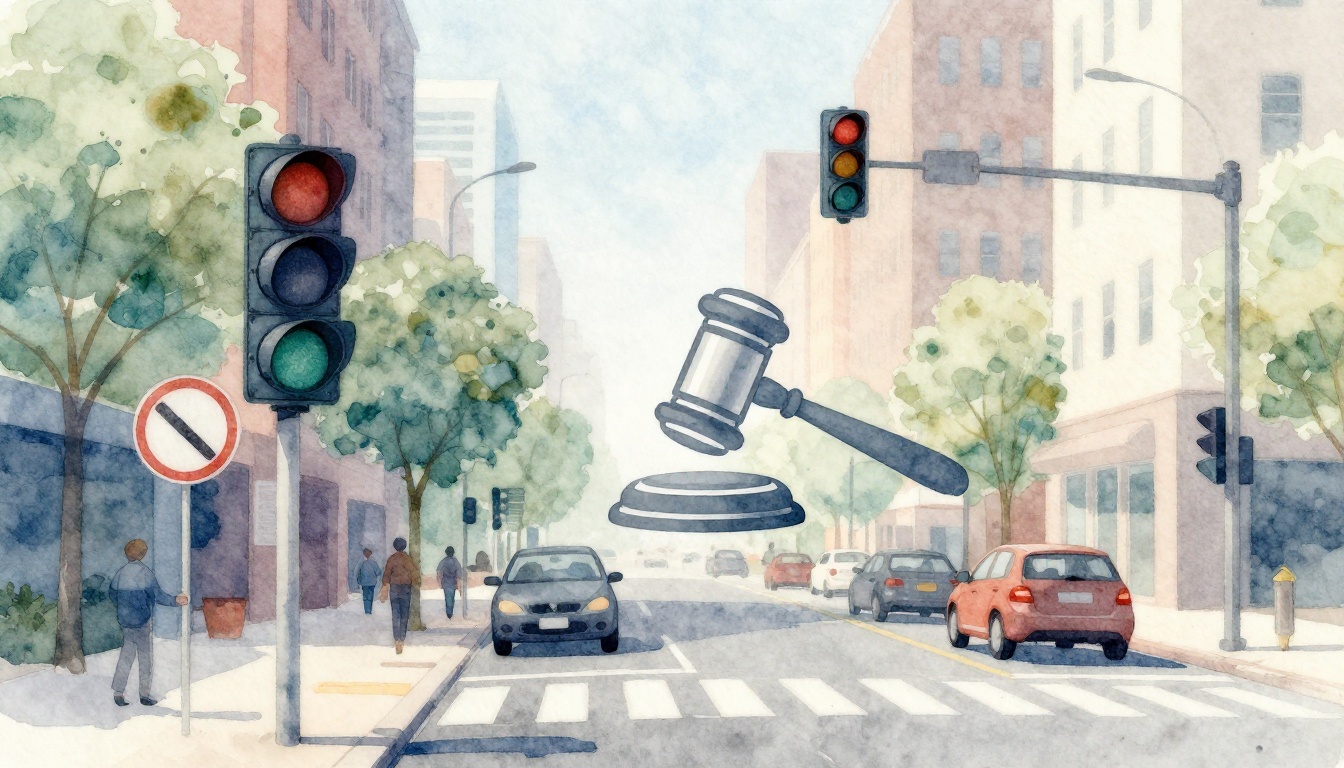
Picture driving without traffic lights, speed limits, or seat-belt rules. It would be chaos. In real life, these everyday safety rules are part of what is law, meaning the rules governments set to guide behavior and keep society fair, with consequences if you break them.
Law shows up in places you use every day. For example, U.S. traffic deaths dropped about 12% in 2025 compared with 2024, and that kind of change often comes from stronger enforcement and safer road rules. Just as important, consumer rules and privacy laws can also shape what happens when you sign up for services or share your info online.
Next, you’ll see exactly how law affects your choices at home, work, and on the road.
The Simple Truth About What Law Really Is
If you want a clear definition of law, start with this: law is a system of rules made by governments or communities to control behavior. These rules aim to keep things fair, and they come with consequences when people break them. Think of law like the guardrails on a highway. You might not notice them until something goes wrong.
Laws also change over time. Many modern rules trace back to ancient codes and early court practices. Over centuries, communities wrote clearer rules, built court systems, and added procedures for disputes. Today, law still does three main jobs: protect rights, resolve conflicts, and keep order.
Law shows up everywhere, even when you feel like you are just living your normal day. Next, you can see how the major kinds of law tend to work.
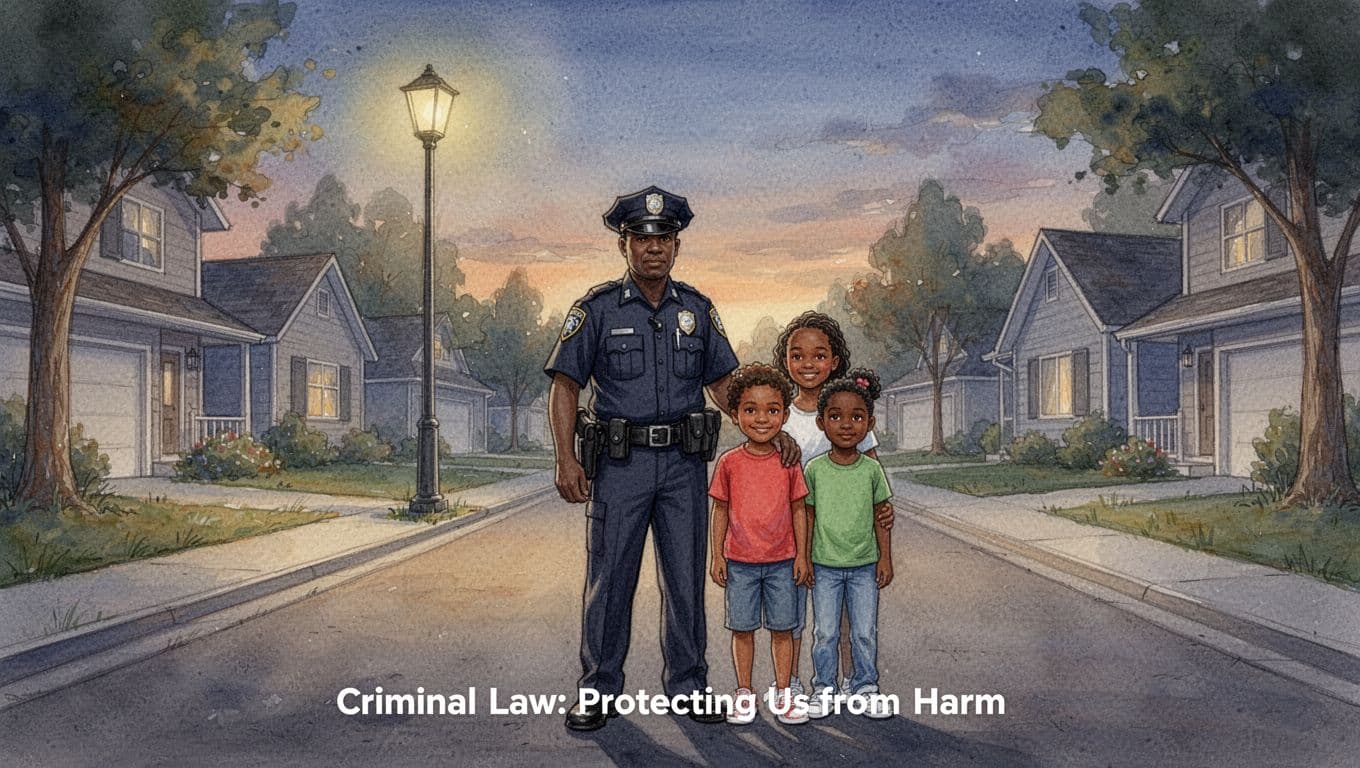
Criminal Law: Protecting Us from Harm
Criminal law covers serious wrongs like theft, assault, and fraud. Because these acts harm more than one person, the government prosecutes them. In other words, the case often looks like “the state versus the accused,” not “one neighbor versus another.”
If someone commits a crime, the court can order punishments like jail time, probation, fines, or other limits. That harsh outcome tells you the purpose clearly. Criminal law exists to protect the public and reduce future harm.
Here’s a simple example. Imagine you steal a bike from someone’s front yard. The owner reports it, police investigate, and prosecutors charge you. Then you face court and possible punishment, such as a fine or jail. That process is not about paying the bike owner back. It focuses on enforcing a rule that protects the community.
To understand criminal law more directly, see criminal law basics from Cornell LII. Also note this key boundary: criminal law is not the usual route for private money problems. That is where civil law takes over.
Criminal law is about the harm to society and the consequences ordered by the court.
Civil Law: Fixing Fights Between People
Civil law handles non-crime disputes. Usually, one person or group sues another person or business because they claim they suffered a harm. The focus stays on fixing the problem, not punishing a “bad act” for the sake of punishment.
Most civil cases aim for compensation. Courts may order payments for costs, losses, or injuries. Sometimes they also order changes, like requiring someone to stop a behavior through an order.
Consider a neighbor who floods your yard after ignoring repeated warnings. You can seek repair costs through a lawsuit. If the court agrees, it may require the neighbor to pay. The dispute is about what went wrong between people, not about whether society must punish the person.
You can read a clear civil law overview from Cornell LII. Keep that distinction in mind as you read the rest of this article, because “civil” does not mean “small.” It just means the dispute type and the goal differ.
Everyday Laws You Use: Contracts, Work, and Privacy
Beyond criminal and civil law, you use other legal rules every day without calling them “law.” They guide how deals work, how jobs run, and how personal data gets handled.
Contract law matters whenever you sign an agreement. It covers leases, service plans, and purchases. When someone breaks a promise, the court can require performance or award money for losses. Think of a contract as a “written handshake” with enforceable terms.
Employment law shapes pay, workplace safety, and fair treatment. For example, many rules limit how employers handle wages and how they handle certain job decisions. Some protections also apply when employees report health concerns or take legally allowed time.
Privacy law affects how companies collect, use, and share your information. It can also limit how employers handle personal data about workers. When rules limit data use, they help protect you from unwanted exposure.
Finally, tax law influences daily life through withholding, filing requirements, and credits. Even if you do not read tax forms closely, tax rules still affect your paycheck and your options at filing time.
Surprising Ways Law Shapes Your Daily Routine
Law sits in the background of your day, like the hidden frame under a picture. You rarely notice it until something goes wrong, then you feel how much it keeps you safe and fair.
Traffic Rules That Save Lives on Your Commute
Ever gotten a speeding ticket? You probably didn’t love it in the moment. Still, speed limits and enforcement exist for one plain reason: fewer crashes and fewer deaths. In 2025, U.S. traffic fatalities dropped to about 37,810 total deaths, down roughly 12% from 2024, even as miles driven increased. That pattern fits what safety rules try to do, reduce risk when people share the road.
Stop signs and red light laws work the same way. When more drivers “run the gap” through intersections, conflicts rise. Red light rules help cut those crash points by discouraging drivers from entering when they should stop. Meanwhile, stop signs reduce dangerous T-bone collisions by forcing clear right-of-way decisions.
Here’s the deterrent part you feel right away: fines. They send a cost signal when your brain thinks, “I can make it.” Enforcement also matters, and NHTSA highlights the role of high-visibility enforcement in changing driver behavior (NHTSA: High-Visibility Enforcement). If you want the evidence angle on speeding, NHTSA’s crash stats explain how often speeding shows up in fatal crashes (NHTSA: Speeding 2023 Data).
Workplace Protections Keeping Your Job Fair
At work, law shapes how you get paid, how safe you stay, and whether your boss can treat you unfairly. Minimum wage rules set a baseline. That baseline matters because rent and groceries don’t care about your employer’s mood.
Safe conditions laws also protect your body. If a job creates hazards, your workplace must follow safety standards. When those rules stick, you get fewer injuries from falls, machinery, or unsafe training.
Then there’s anti-discrimination law. It helps keep hiring, promotion, and discipline from turning into personal bias. For example, if you need time off for a health issue, the law may protect your job or your right to certain leave, depending on the situation and your employer. That can keep a medical event from turning into a career collapse.
Even workplace rules that seem boring, like wage payment timing and overtime rules, protect your day-to-day stability. In other words, they reduce chaos when you already have enough stress.
Consumer Rights When You Shop or Subscribe
When you buy something, law becomes your guard at the checkout line. It matters most when a product fails, a subscription surprises you, or labeling misleads you.
Refund rights and warranty rules shape what happens after you discover a problem, like a broken TV right out of the box. In many cases, you have options to return it, get a refund, or seek repair. Those rights also cover the stuff you cannot fully test on day one, such as whether a product holds up or matches what you were promised.
Allergen labeling is another example. If you have a food allergy, clear labels are not a nice-to-have. They are a safety tool, so you can avoid ingredients that could hurt you.
Also, hidden fees are not just annoying. Laws and enforcement actions push companies to be clear about charges and canceling. The practical effect is trust. When companies must explain what you pay for and how to stop it, you spend with less fear.
Privacy Shields in Your Digital World
On your phone and on social media, privacy laws act like locks on a door. They limit how apps collect data, what they can do with it, and when they need your okay.
Think about location sharing. Many apps ask permission because law expects consent for collecting and using sensitive info. Without that consent, companies face consequences when they treat your data like free material.
Privacy rules also help with access and control. They push platforms to provide ways to manage data, request deletion in some cases, and limit certain uses. In plain terms, they help prevent a “background surveillance” habit.
If you ever noticed how an app knows you are “near” a store you just mentioned, that’s not magic. It’s data moving through systems, and law tries to set boundaries on that movement. As a result, you get more control over what companies can do with your everyday digital life.
2026 Laws Making a Real Difference Right Now
Laws in 2026 are doing more than filling statute books. They’re changing what happens on the road, after work hours, and when tech apps collect data from your family. Some rules push for safer behavior. Others push back on how much companies can watch.
The biggest theme is simple: enforcement and privacy rules are tightening at the same time. That means daily life feels the change quickly, even if you never read a single bill.
AI Cameras and Smarter Speed Enforcement
If you drive in New York, you may already feel how automated enforcement works. In 2026, New York City kept expanding camera coverage, including additional red-light cameras at more intersections each week. The city says the program aims to reach 600 intersections by the end of 2026, using camera systems to reduce crashes linked to red-light running and speeding patterns.
What does this mean for you in real life? It means fewer “close calls” where someone blasts through on yellow, then slams the brakes in the last second. NYC DOT reports large drops where cameras are installed, including 73% fewer red-light runs, 65% fewer T-bone crashes, and 49% fewer rear-end collisions. Even if you don’t know which exact intersection has a camera, your daily risk profile can still shift as coverage grows.
At the same time, these systems raise privacy worries. Many camera setups rely on automated plate reading, speed measurement, and data matching. For drivers, the concern isn’t abstract. People want to know:
- How long the footage and plate data get stored
- Who can access the data
- Whether the system is audited for errors or bias
Some reporting also highlights privacy debate around automated enforcement, especially as camera networks grow more capable. You can see NYC DOT’s rollout details in NYC DOT’s red-light camera activation update. If you want a broader view of the safety results people cite, Rutgers-linked coverage also discusses how automated cameras can help road safety in NYC (automated speed cameras safety study in NYC).
The bottom line: AI cameras can change behavior fast because they remove the “I got away with it” feeling. Still, privacy questions will keep popping up, and lawmakers will likely keep tightening rules on data handling as the tech spreads.
Right to Disconnect: Ending After-Hours Emails
Burnout rarely starts with a dramatic event. Usually, it starts with small pings after dinner. In 2026, the “right to disconnect” idea is no longer just a workplace buzzword. It shows up in laws and policies across multiple countries, and the goal stays consistent: stop work from spilling into every hour you’re awake.
These rules work like a boundary line. They do not stop emergencies. Instead, they push companies to set expectations for after-hours messages. In many places, employers must allow workers to ignore emails, calls, or other digital contact outside normal working time, unless it fits a defined emergency or urgent situation.
Why does this matter more for remote jobs? Because remote work makes “home time” feel optional. Your laptop stays nearby, your chat app stays open, and your brain keeps scanning for new tasks. As a result, your workload can expand without a clear end point.
Several countries have built frameworks around this. France led early, and other regions followed with their own versions. Australia, Spain, and other countries have similar protections, though details vary. The legal logic tends to match what workers already want: rest time should mean rest time.
In practical terms, right-to-disconnect protections can change team habits. Managers plan for real response windows. Workers get clearer rules for when they should reply. Companies also tend to shift toward tools that separate “urgent right now” from “we’ll handle it tomorrow.”
If you want a comparative legal look at how this idea works, see disconnecting digitally beyond working hours study.
For U.S. workers, there’s no single federal right-to-disconnect law. However, the global trend still matters. It pressures U.S. employers, especially companies with international teams, to adopt clearer after-hours rules. So even when a law doesn’t apply directly, the workplace norms can shift anyway.
Tougher Privacy for Kids and Data Fines
Kids’ privacy enforcement in 2026 is getting stricter, and the daily impact shows up in two places: app design and real financial risk for companies. Instead of relying on vague promises like “we care about safety,” regulators now focus on verifiable rules for how apps collect data from minors.
A major driver is the push to stop targeted tracking of teens. In the U.S., the system is layered. States keep adding rules, while federal updates expand coverage for certain age groups and tighten how enforcement works.
One big example involves Texas and the SCOPE Act. The Texas SCOPE Act restricts sharing or selling personal info about people under 18 without proper parent control tools. That makes it harder for social apps to treat teen data as an open tap for ads and analytics. It also ties into lawsuits where teens may have faced tracking without enough parent oversight.
At the same time, larger federal frameworks are moving. Updates like “COPPA 2.0” are designed to cover a wider age range and reduce targeted ads to minors. KOSA (Kids Online Safety Act) adds duties aimed at app risk checks, safer default settings, and better transparency around how platforms steer user behavior.
Then there’s the part companies feel immediately: fines. Courts and regulators can impose heavy penalties when they find data practices that violate kids’ privacy rules. Even when a headline does not name a final dollar amount yet, the direction is clear. Tech firms now plan around privacy compliance, not just user experience.
For families, these changes matter in everyday ways:
- Your child’s profile settings may default to safer options
- Apps may reduce data collection used for ad targeting
- Parents may get better tools for age controls and consent
And yes, social platforms can still be risky. But tougher privacy rules shift the balance. They reduce the odds that a teen’s clicks turn into a detailed tracking map without meaningful oversight.
The bottom line is straightforward: kids and teens now have more legal pressure protecting their data, and companies now face steeper consequences if they ignore it.
Why Embracing Law Leads to a Better Life for Everyone
Law is not just something courts discuss. It shapes how people live, work, and trust each other. When rules are clear and fairly enforced, daily life feels smoother. When rules break down, you feel it fast, usually in small annoyances and then in big harms.
Think of law like street lighting in your neighborhood. You might not notice it at noon. But at night, it helps everyone move safely. The same idea applies to legal rules. They reduce confusion, limit unfair power, and give you a path to fix problems.
Most importantly, law protects your rights and everyone else’s, even when you disagree. It also handles conflict in an organized way. Without that structure, disputes turn personal. People then rely on fear, force, or favors instead of evidence and process.
Here’s what that looks like in real life: you can drive because road rules exist. You can sign a lease because contract rules exist. You can challenge fraud because courts can respond. In other words, law turns “I hope” into “I can.”
Order and Safety: Fewer Surprises, Fewer Harms
When law sets standards, it helps keep public spaces safer. Traffic rules, criminal rules, and enforcement practices all aim to reduce harm. Even small steps, like speeding limits and seat-belt requirements, add up over time.
In the U.S., rule-of-law measures track how well systems support order and security. The World Justice Project reports the U.S. ranks around 26th out of 143 countries based on factors like safety and the rule of law’s strength. That ranking matters because it connects to everyday outcomes, like safer streets and steadier protections when things go wrong. For a deeper look at the “why,” the ABA outlines how rule of law supports prosperity and stability in ways that reach beyond courts (Upholding Prosperity: The Economic Benefits of the Rule of Law).
Law also reduces the “wild card” feeling. If you can predict the consequences of risky choices, you plan better. You also trust institutions more, because you expect fair treatment.
Rights Protection: You Get a Fair Shot, Not a Lucky Break
Law gives rights a backbone. That means it’s not just polite values or good intentions. It’s enforceable rules, backed by courts and clear procedures.
When your rights hold, you get real options. If someone steals from you, you can report it. If a business breaks a contract, you can sue. If you face discrimination, you can seek help. Those paths exist because the legal system treats fairness as a requirement, not a favor.
This is the difference between “someone did me wrong” and “the system can respond.” That shift protects everyone, not only people with money or status. Still, it’s smart to know the system has friction. Some rule-of-law reports show the U.S. struggles more with civil justice access than with order and security. That means the promise of rights works best when people know their options and keep pushing for fair access.
For a plain-language view of the core ideas behind rule of law, see rule of law principles in a free society.
Fair Dispute Resolution: Conflicts Get Managed, Not Escalated
You don’t want every conflict to become a fight. You want a process. Law builds that process through courts, hearings, and legal standards for evidence.
That matters because disputes rarely start neat. One person feels harmed. Another person feels accused. Emotions rise, and everyone wants a quick win. Legal procedures slow things down, so facts can matter more than heat.
In civil disputes, courts often focus on repair and compensation. In criminal cases, the state can pursue punishment for harm to the public. Either way, the goal is to handle conflict in an organized way, not through revenge.
If you want a reference point for how these dispute types differ, Cornell Law School breaks down civil law basics and how it works compared with criminal matters.
A fair process keeps everyday life from turning into constant conflict.
Trust in Society: Rules Create Predictability for Everyone
Trust grows when people expect the same rules to apply to them. That includes businesses, landlords, employers, and everyday neighbors.
When laws are consistent, people act with confidence. They buy goods because warranties and refunds exist. They move into homes because eviction rules exist. They share information with apps because privacy rules set limits. Law makes those interactions less scary and more routine.
Also, law helps stop corruption from quietly stealing from the public. If leaders cannot misuse power, money gets spent on real services. That improves life for people who never set foot in a courtroom.
A strong rule-of-law culture does more than punish wrongdoers. It teaches everyone a simple lesson: life should not depend on who you know. Instead, it depends on rules.
A Practical Reason to Take Law Seriously Today
You might not love rules. Still, following them often keeps you out of trouble and helps protect the people around you.
Start with the basics you already face: traffic laws, workplace rules, consumer rights, and privacy limits. When you know the rules, you make better choices. You also handle problems faster, because you know what to ask for.
Ask yourself this: if law did not exist, what would replace it? People would negotiate with anger, not with process. Roads would rely on luck. Deals would depend on power. That’s not just unfair, it’s exhausting.
So the best reason to embrace law is simple. It helps people live with less chaos, more fairness, and stronger community bonds.
Conclusion
Law is the everyday rules that help life run with order and fairness. Because laws set clear limits and clear steps, people know what to expect, and they can protect their rights when something goes wrong.
The strongest takeaway is simple: when law matters, daily life gets safer and more predictable. That shows up on the road, at work, in consumer deals, and in how privacy rules shape what companies can do with your data.
Keep an eye on 2026 changes, especially around enforcement and privacy. When you stay informed, you make better choices and you spot problems sooner.
What law rule has affected your day the most (a traffic rule, a contract term, or a privacy setting)? Share your story in the comments, then subscribe for more clear, practical guides on law in daily life.