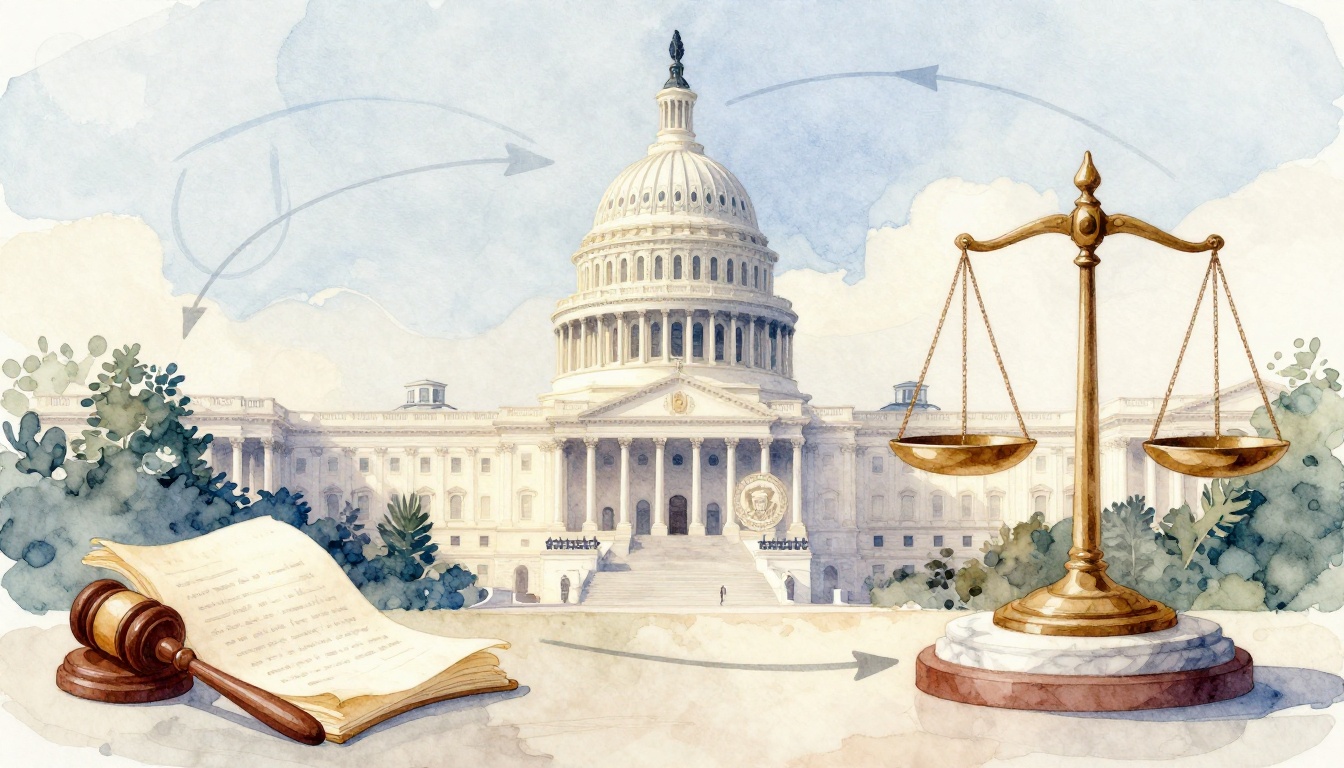
Have you ever wondered where laws come from, or how they actually get put into action? It can feel like rules just “show up,” especially when you see new headlines about taxes, schools, or rights.
In the U.S., how laws are created and enforced is a real process with real steps. Bills start with lawmakers, then they face gatekeepers in Congress. After that, the President can sign or block them. Finally, agencies and courts decide what happens in real life.
Also, here’s the part most people don’t hear often: more than 90% of bills never become law. Many never get a vote. Others get changed so much they lose support. So, even when lawmakers talk loudly, the path to a new law is tough.
To make it clear, this guide walks through the US federal laws process step by step. First, you’ll see how bills move through Congress. Next, you’ll learn what the President can do with a bill. Then, you’ll learn who enforces federal laws, and how courts step in when disputes rise.
By the end, you’ll know why this matters for your everyday life, from tax rules to protected rights.
From Idea to Bill: The Step-by-Step Path Through Congress
A bill is basically an idea written down. Still, turning that idea into a law takes time and negotiation. Think of it like building a house. You need permits, inspections, and a lot of approvals before anyone lives there.
Here’s the usual path for how bills become laws in Congress:
- Introduction: A member of Congress files the bill in either the House or Senate.
- Committee review: A committee studies it, holds hearings, and may vote to move it forward.
- Floor action (first chamber): The full House or Senate debates and votes.
- Second chamber test: The bill repeats the process in the other chamber.
- Conference committee: Leaders compare versions and negotiate one final text.
- Presidential decision: The President signs, vetoes, or sometimes leaves it to become law.
If you want a clear overview of this route, Everyday Civics has a step-by-step guide to how a bill becomes a law. That kind of reference helps when you read bill updates and want to know what stage you’re looking at.
One more thing. Most bills stop early, especially in committee. It’s not personal, but it’s also not friendly to everyone’s priorities. Committees have limited time, and they only move ideas they think will survive later votes.
Introducing and Sponsoring a Bill
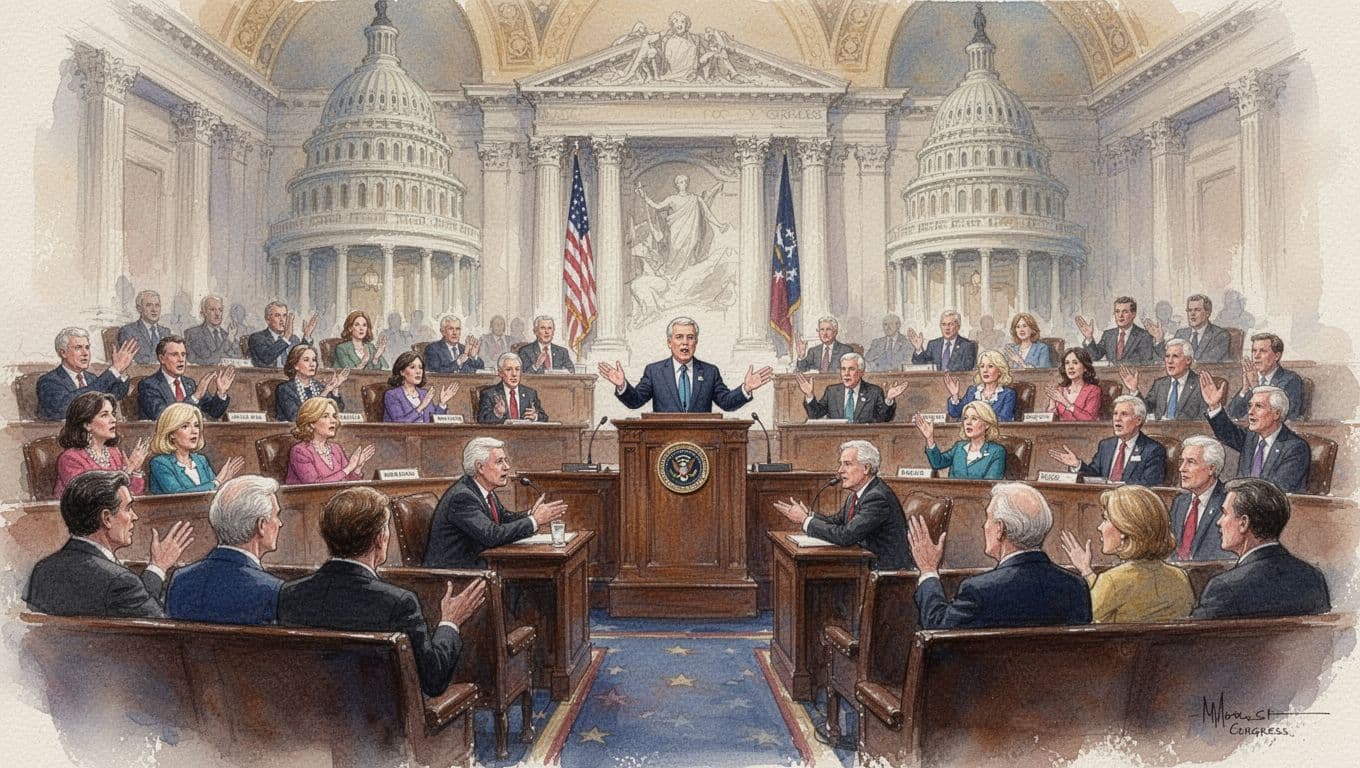
In the House, bills often start with members of Congress who have a bill draft and a plan. In the Senate, they do the same. Any lawmaker can introduce a bill, but the details depend on the chamber.
A bill gets a label too. You might see H.R. for House bills and S. for Senate bills. Higher-profile bills can even be numbered in a way that makes the news, like H.R. 1 or S. 1.
Also, sponsors matter. The person who introduces the bill is the main sponsor. Then you’ll usually see co-sponsors, which signals support. That support matters because it affects what committees do next. If a lot of lawmakers back the bill early, it’s easier to find allies when changes are proposed.
One practical rule is that House and Senate responsibilities can differ for certain topics, like revenue measures. When money or taxes are involved, the House plays a special role in starting many of those bills.
Here’s the plain-English analogy. Introducing a bill is like pitching an idea in class before the big vote. You explain what you want, why it matters, and what you’re asking everyone to agree on.
After the bill is filed, it doesn’t automatically move to debate. Instead, it goes to the right committee, where the real pressure begins. In many cases, that committee decides whether the idea lives long enough to reach the floor.
Committee Hearings and Markups: Where Ideas Get Scrutinized
Committees are where bills go to get tested. And most of the time, that testing is not quick.
First come hearings. Lawmakers invite experts, agency staff, and people with real-world experience. They ask questions and look for facts. Sometimes they also invite critics, because lawmakers want to understand risks.
Then comes markup, which is committee debate focused on changes. Members argue over language. They add fixes. They remove parts. They also try to reduce costs or avoid legal problems.
A committee might approve the bill and send it forward. If it doesn’t, the bill often dies there. That’s why you’ll hear people say “committee is the gate.”
For a more detailed look at how bills move through these steps, this guide on how a bill becomes law in 7 steps maps the process clearly. It’s helpful because the names of stages can sound similar, even though they work differently.
So, what does this scrutiny look like in real life? Imagine a team reviewing game film. The committee asks, “Does this plan work?” Then it changes the play so the full team can execute later.
Also, hearings and markup shape the final bill. Even when a bill survives, it often looks different from the original draft. That’s one reason bill tracking is so important if you follow policy closely.
Floor Action: Debates, Amendments, and the Big Vote
Once a bill clears committee, it reaches the floor for debate and voting in that chamber. This is where the public often thinks the real fight happens, but it’s usually not the first fight.
In the House, debate rules are often more structured. A House rules process can limit how long members talk and what amendments are allowed. Then the House votes. Typically, passage requires a simple majority, which means 218 votes when all House seats are filled.
In the Senate, debate is more flexible, and that flexibility is often tied to how the Senate handles extended debate. Senators can use the filibuster to slow things down, so supporters may need extra votes to end debate and move to final passage. For a normal simple-majority vote, the Senate typically needs 51 votes.
During floor action, lawmakers can propose amendments. Some amendments aim to improve the bill. Others aim to change it so much that support drops. Either way, amendments can shift the deal.
If the bill passes one chamber, the story isn’t over. It heads to the other chamber, where it can face a new committee review, new debate rules, and new vote counts. That repeat is one reason laws often take so long.
If the two chambers pass different versions, a conference committee may blend them into one final text. Then both chambers vote again.
So yes, it can feel like a long maze. But each step exists for a reason: to force compromises and prevent rushed changes that would hurt people later.
The President’s Role: Sign, Veto, or Pocket Veto Explained
After Congress passes a bill in the form both chambers accept, the President gets the final say. Many people describe this as one dramatic moment. In reality, it’s a defined set of options.
The President can sign the bill into law. If that happens, it becomes part of the official federal statutes.
The President can also veto. A veto means the bill does not become law. The President sends the bill back with objections, and Congress can try to override the veto.
Timing matters too. The President has 10 days to act, not counting Sundays. If the President signs within that window, the bill becomes law. If the President vetoes and Congress overrides, the bill becomes law anyway. If the President takes no action and Congress is still in session, the bill can become law by default after that period.
There’s also the pocket veto, which can happen when Congress adjourns. In that case, the bill may not become law if the President doesn’t sign it, because the process clock works differently when the chambers are not meeting.
An override needs two-thirds of members in both chambers. With today’s seat counts, that means 290 votes in the House and 67 votes in the Senate.
If you want the procedural details in plain language, the National Archives has a helpful explanation in The Presidential Veto and Congressional Procedure. It’s a good source when you want to confirm the timeline and terms.
The President is like the goalie. You can score, but the goalie can still stop the shot.
Once the President signs, the bill is enrolled for publication. After that, courts can still review it later if someone argues it violates the Constitution.
Who Enforces Federal Laws? Key Players and Their Jobs
Congress and the President create laws, but enforcement happens in the executive branch and in courts.
The Constitution requires the President to faithfully execute the laws. So, the President directs agencies to apply rules. Agencies then investigate alleged violations, pursue cases, and follow established procedures.
Courts play a different role. Courts decide whether someone broke a law and what the penalties should be. When enforcement creates disputes, judges and juries step in.
Here’s the team idea. Investigators find problems. Prosecutors bring cases. Judges decide outcomes. That pattern repeats across many types of federal law.
Also, enforcement isn’t one-size-fits-all. Different crimes fall under different agency missions. Some cases involve money. Others involve borders. Still others involve threats to public safety.
For most people, it shows up through familiar settings: an IRS audit, a criminal arrest, a court trial, or an appeals process.
Department of Justice and Federal Police Forces
In the federal system, the Department of Justice (DOJ) plays a central role in enforcement. DOJ oversees prosecutors and coordinates much of the legal work behind criminal cases.
But DOJ also relies on enforcement partners. For example, the FBI handles many federal crimes, like terrorism, cyber threats, public corruption, and civil rights cases. The FBI also has rules about where it has authority and what cases it investigates.
The FBI explains its focus areas in what it investigates. That page shows how broad its mission can be.
DOJ prosecutors, often called U.S. Attorneys, then take cases to federal court. They present evidence, argue for convictions when appropriate, and ask judges for penalties.
If a judge finds someone guilty, the court sets consequences. Those can include fines and prison time. Federal prisons and supervision also fall under the broader justice system, including probation and supervised release.
So, if you picture federal enforcement as a relay race, investigators and police forces carry the baton first. Then prosecutors run the next leg. Courts finish the race with a ruling.
Specialized Agencies Tackling Specific Crimes
Not every federal law is enforced by DOJ alone. Many agencies enforce laws connected to their specific responsibilities.
For example, DHS agencies often handle immigration enforcement and border-related matters. IRS handles tax enforcement and tax fraud investigations. Other federal bodies address areas like financial crimes, fraud schemes, and public safety threats.
Many of these efforts involve task forces. Task forces bring together people with different skills. They might include federal agents, specialized investigators, and sometimes local partners.
Also, oversight matters. Inspectors General and other oversight bodies help monitor agencies. When agencies misuse authority, oversight can trigger investigations, audits, or policy changes.
This is one reason enforcement can feel “messy” to the public. It’s not one agency pushing one button. Instead, it’s a web of roles that match the type of law at issue.
Still, the goal stays the same: enforce the law in a lawful way, with due process and evidence-based cases.
Courts Deliver Justice: Trials, Penalties, and Oversight
Even with strong investigations, enforcement doesn’t finish until courts weigh in.
Federal courts can be trial courts first, then appellate courts if someone appeals. The Supreme Court sits at the top, but most cases end before reaching it.
In federal criminal cases, defendants can face trials. In civil cases, courts can decide disputes over enforcement actions or penalties. In either setting, the judge makes legal rulings on procedure and evidence.
If someone violates a law, penalties vary. Courts can order fines, prison time, or other measures. If someone is acquitted, the case ends there. But appeals can still lead to new rulings.
Courts also provide oversight beyond just the trial. If enforcement violates legal rights or key legal standards, courts can limit what agencies can do next.
This system is part of why federal laws aren’t just commands. They come with boundaries. And those boundaries protect people, even when enforcement is serious.
Conclusion: What This Means for Everyday Life
Laws don’t appear out of thin air. In the U.S., how laws are created and enforced follows a clear chain: Congress drafts and votes, the President decides, and agencies plus courts handle enforcement.
Most bills die before they ever reach real impact. That slow, multi-step path forces lawmakers to compromise and forces enforcement to follow rules.
So the next time you hear about a new federal law, look past the headline. You’ll understand the longer story behind it, and you’ll see how it could affect taxes, rights, or public safety in your daily life.
Want to track one current bill? Find it by number, then follow which committee and chamber it’s in.