
In 2026, families in Los Angeles still felt the shock after ICE carried out raids tied to warrantless home entries and arrests in 2025. Reports and lawsuits claimed the actions relied on racial profiling and aggressive force, and that’s the kind of stress that makes people ask, know if your rights are being violated.
When police, a workplace, your home, or even a protest crosses limits, it often starts with small warning signs. You might hear a command that feels “too much,” see a search that seems off, or get punished for speech you didn’t think could be restricted.
So how do you spot rights violations in real time, and what can you do next? Keep reading to learn the core rights to watch, common red flags, and clear steps to fight back.
Your Core Rights from the Constitution Everyone Should Memorize
Memorizing a few core rights helps you spot violations fast. When things feel rushed, your brain grabs rules like a lifeguard grabs a whistle. So you can react calmly, not just panic.
These rights also help you compare what someone says versus what the Constitution allows. In 2026, speech curbs on media and tougher protest crackdowns show up in new forms, even when the basic rules stay the same.
Bottom line: If you can name the right, you can often name the violation.
Free Speech and Peaceful Protests
The First Amendment protects your right to speak, write, and gather. That includes peaceful protest, and it includes symbolic actions. It also protects you from punishment just because officials dislike your views.
Here are everyday ways this shows up:
- Talking and posting opinions: You can share your views publicly, even if they upset people.
- Peaceful protests: You can gather with others, as long as you stay peaceful.
- Being punished for beliefs: A red flag is when authorities hit you with fines, arrests, or threats for your message alone.
Sometimes the pressure comes dressed up as “labels” or “risk.” For example, activists and NGOs can face pressure when they are marked with claims like “foreign funds,” even when the real issue is what they say. If the punishment targets viewpoints more than safety, take note.
If you’re thinking, “Can I film cops?” In most places, you generally can record police in public, as long as you don’t interfere. That recording is often part of protected speech and accountability.
For a clear, plain explanation of what free speech covers, see what free speech means.
Protection from Searches and Seizures
The Fourth Amendment protects you from unreasonable searches and seizures by the government. In simple terms, police usually need a warrant or a valid reason based on probable cause.
Think of it like this: your body and your home have a lock. Government access needs the right key.
Common red flags include:
- Phone searches without consent: You do not automatically have to hand over your phone just because officers ask.
- Searching your car or bag “because they can”: A traffic stop is not a blank check.
- Seizure without reason: If you are detained or your property is taken, they should be able to explain the legal basis.
For context straight from federal court education material, review what the Fourth Amendment means.
Right to Remain Silent and Get a Lawyer
The Fifth Amendment gives you the right to remain silent. The Sixth Amendment supports your right to a lawyer during a criminal case. Together, they protect you from being forced to talk yourself into trouble.
During an arrest, silence is power. You can say as little as possible and still protect yourself.
Watch for these red flags:
- No chance to make a call: If they block you from contacting a lawyer, that is a serious warning sign.
- Refusing a lawyer request: You should not be pushed to answer questions without legal help.
- Pressure to talk “just for now”: That pressure can be a trap.
For a solid starting point on how Miranda connects to the right to remain silent, see Miranda v. Arizona facts.
Quick quiz: If an officer searches your phone during a stop and you did not consent, which Constitutional right should you think about first: the 1st, 4th, or 5th?
Red Flags in Police Stops and Arrests That Scream Violation
The most painful part of a rights violation is how ordinary it can look at first. You get a stop, a command, maybe even a “small talk” moment. Then something starts to feel off, like the rules are changing mid-sentence.
Pay attention to patterns, not just one bad moment. If the stop or arrest keeps stacking up red flags, your rights may already be on the line.
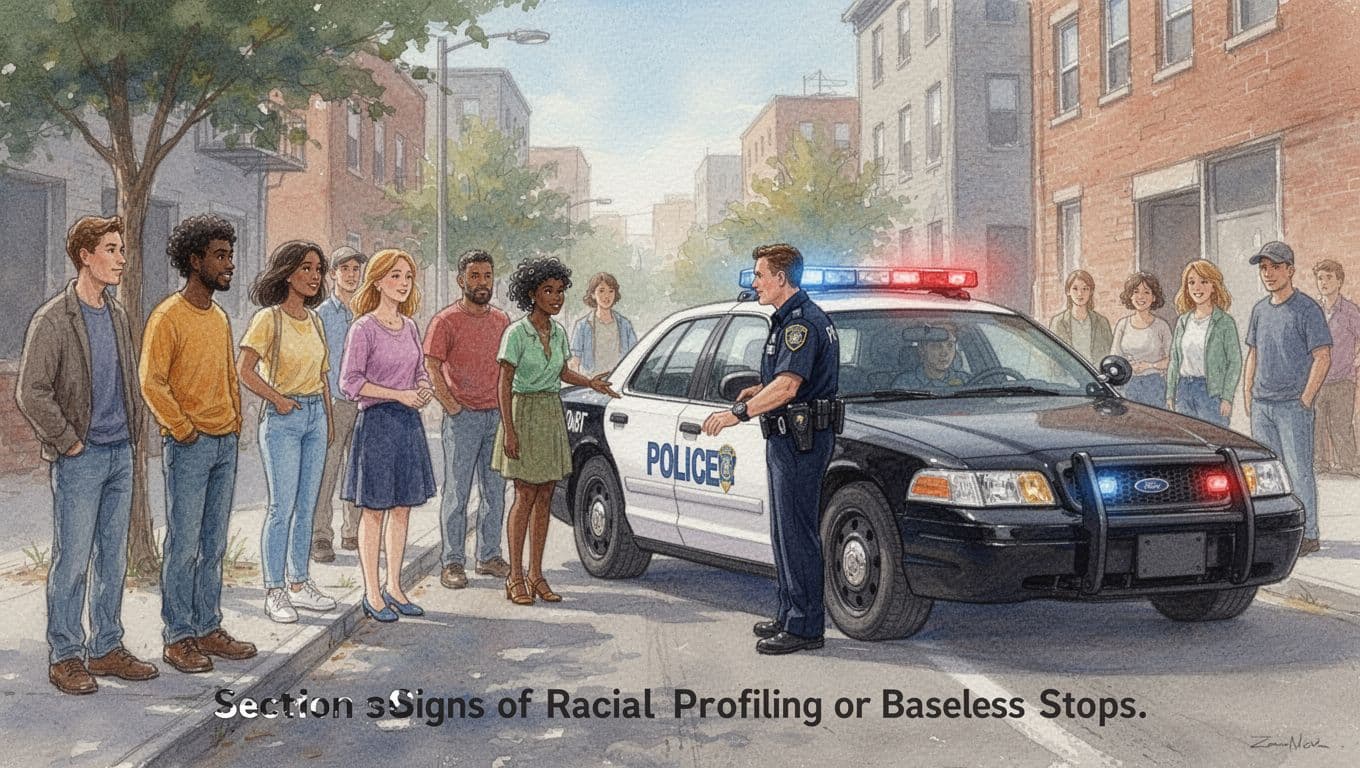
Signs of Racial Profiling or Baseless Stops
A baseless stop often wears a normal face. Officers may claim “suspicion,” but they fail to explain a specific crime or clear behavior. That gap matters.
Here are common red flags that point toward racial profiling or a stop without a real basis:
- You’re stopped for race or family status (not behavior). The officer’s explanation sounds like “you don’t belong here” instead of “you did X.”
- No clear violation is explained. They mention “looking suspicious,” but they cannot point to facts you can understand.
- The reason changes after you ask questions. First it’s one thing, then it becomes something else when you request details.
- They keep you longer than needed without new facts. They ask unrelated questions, keep searching, or delay letting you go.
- They treat you differently than nearby people. Similar cars or people nearby avoid attention, while you get the full stop.
You can also look at the “accountability gap.” When officials can’t explain why they stopped someone, it’s hard for you to challenge it. It’s also harder to spot patterns over time.
If you want real-world context, California reports have tracked racial and identity disparities in who officers stop and search. For example, see analysis of RIPA data on police stops.
What can you do in the moment? Stay calm, but stay firm. Try these short phrases:
- “Am I free to go?”
- “What specific law or reason makes you stop me?”
- “I do not consent to any search.”
Also, if it’s safe, you can film police in public. Hold your phone steady, keep your hands visible, and avoid sudden moves. Your goal is safety plus a record.
Excessive Force or Unlawful Detention
Sometimes the violation shows up in your body, not just the paperwork. Excessive force and unlawful detention often start with “compliance” pressure, then turn into rough handling, even when you pose no threat.
A clear red flag is force without a live safety need. Picture it like a bouncer using a fire extinguisher for a single cigarette. The tool does not match the risk.
Watch for these warning signs:
- Rough handling after you comply. You follow commands, yet they slam you, twist you, or push you into a wall.
- Detention that turns into a stop-and-search trap. They block your path, then keep expanding the encounter.
- Held without charges or a clear basis to stay. If you cannot leave, ask what legal reason they use. If they can’t answer, that matters.
- Pain used as a control tool. Hogtying, pressure on joints, or “grabbing” that seems meant to punish, not protect.
- Mistreatment during custody transfers. Handcuffs too tight, no check for injury, or neglecting medical needs.
In 2026, these issues don’t only show up in traffic stops. Reports and public concern also focus on federal actions tied to raids, including settings like schools or hospitals, where people expect careful rules and restraint. Local and state responses sometimes involve National Guard presence in city settings, and the same question follows you: what specific threat justifies the level of force?
For a plain explanation of when detention crosses legal lines, you can read illegal detention basics and the rule.
In the moment, your safety comes first. Still, you can protect your rights with simple moves:
- Comply with safety commands while you speak.
- Say clearly, “I do not consent to searches.”
- Ask, “Am I under arrest?” and “What are you charging me with?”
- If you’re hurt, ask for medical help right away.
When force escalates, your best defense is calm documentation. If you can, record after you’re safe, then write down details as soon as you can.
Everyday Violations at Work, Home, and in Housing
Rights violations rarely announce themselves with a big red sign. Instead, they show up as small shocks in your day, then they repeat. One denied request turns into a “wrong personality fit” story. One late payment becomes a fast eviction push.
When your life feels harder for reasons that don’t match the facts, pause. Patterns in speech, bias, paperwork, and timing often tell you what’s really going on.
Workplace Bias and Retaliation Tricks
Sometimes the employer does not fire you for one dramatic reason. Instead, it uses a quiet script: ignore your discrimination complaint, then punish you for speaking up.
A common move looks like this:
- You report bias, then your work suddenly “slips.” Deadlines get harder, feedback gets harsher, and small mistakes become “performance problems.”
- You request a religious or disability accommodation, then face hostility. After that, you get treated like you’re the problem.
- You speak up about unfair treatment, then get cut off. Your hours drop, your role shrinks, or you get reassigned without a real business reason.
This is where retaliation matters. The EEOC explains that retaliation is prohibited under multiple EEO laws, and it can cover lots of “related conduct,” not just a direct threat. For a clear baseline, see EEOC guidance on retaliation.
Retaliation often hides behind “process.” You might hear things like “We never received that email,” or “We already decided.” In addition, managers may act polite in meetings, then document you in writing after you complain.
Before you lose your footing, gather proof like you’re keeping receipts for a court. Save emails, calendars, and performance notes. Also, write a short timeline while memories are fresh. If you can, ask for key decisions in writing.
If you’re not sure whether a job falls under federal rules, start with USAGov’s job discrimination basics. Then check your state rules too, because many states give extra protections.

Housing Denials and Sneaky Evictions
Housing discrimination often looks “legal” at first, because it hides in the fine print. You apply, you get a polite rejection, then you realize the story changed when your family situation, disability needs, or protected identity came up.
A denial might show up as:
- “No rentals available” after you mention kids or a disability.
- A “credit issue” explanation that contradicts how other applicants were treated.
- A promise to call back that never happens, even after follow-ups.
Then come the evictions, and this is where timing gets weaponized. Landlords may push for removals during raids, or during chaotic moments, when tenants cannot find help quickly. In housing that follows federal rules, shortened notice can also create pressure that feels designed, not accidental.
In 2026, watch how HUD’s approach to disparate impact affects enforcement. Federal rules have long treated neutral policies as unlawful when they harm protected groups without a fair justification. For the latest federal framing, review HUD’s disparate impact standard in the Federal Register.
Also, pay attention to eviction notice rules in HUD-assisted housing. Some changes can shift how much time tenants get before eviction for unpaid rent. If you want an easy summary of the direction of those rule changes, see HUD eviction notice rules for HUD-assisted housing.
When your housing situation feels like a trap, don’t rely on guesswork. Check your lease for notice terms and dispute steps. Then ask for the reason in writing. If you’re served with papers, act fast, because deadlines move quickly and delays cost leverage.
Bottom line: When the reason you get punished matches who you are, not what you did, bias is often the hidden cause.
Unwarranted Government Snooping on Your Data
This kind of rights violation often feels invisible. One day you trust your apps and accounts. Next, you learn the government asked for your information through tech channels, without a court order that fits your situation. In short, it can look like your data got treated like public property.
Most of the time, the warning signs are not dramatic. Instead, they show up as sudden policy shifts, strange notices, or missing records. Sometimes a company receives a demand and tells users only that something happened, not what the law required.
So what counts as unwarranted snooping? A common pattern is when government agencies push tech companies to hand over data, using legal tools that do not require individualized court review. That’s where your privacy rights get squeezed.
Demands from tech without court order
Think of your data like a set of keys in a drawer. A warrant is a judge saying, “You can open this specific drawer.” Without that, the request feels more like someone forcing the drawer open because they claim they can.
Here are real-world red flags tied to warrantless data grabs and online pressure:
- Phone or location data demands: Agencies ask for data tied to devices, location pings, or “subscriber information,” even when they cannot point to a clear, case-specific basis.
- Account pulls tied to viewpoints: Your account gets limited, flagged, or banned after you post. Then you learn the push came from government pressure, not just platform rules.
- “Foreign agent” or similar labels: Posts get censored or accounts get demoted after officials or allies claim a group is foreign-influence. The label can become the reason, even when the underlying speech is still protected.
- Surveillance via data brokers: Your information may first pass through brokers, then later get used or sold. Even if you never signed a contract, your pattern can still end up in someone else’s file.
- Press and NGO scrutiny that spikes in 2026: If journalists lose access or credentials, or NGOs face aggressive probes, that can connect to broader efforts to chill public reporting and limit oversight.
A key point: tech companies often resist these demands, but they may not always have the power to stop them. As one example of the kind of pressure users can face, the Electronic Frontier Foundation has written about tech companies being asked to protect users from what it calls lawless government subpoenas. See EFF’s open letter on DHS subpoenas.
In practical terms, ask yourself: Did anything change right after you posted, organized, or investigated? If the timing lines up, treat privacy as a rights issue, not just a tech setting.
High-Risk Spots: Protests, Immigration, and Public Gatherings
High-risk rights battles often happen where people expect protection. At protests, immigration stops, or crowded public events, the pressure ramps up fast. Officials may cite “safety,” but your job is to watch for clear limits being crossed.
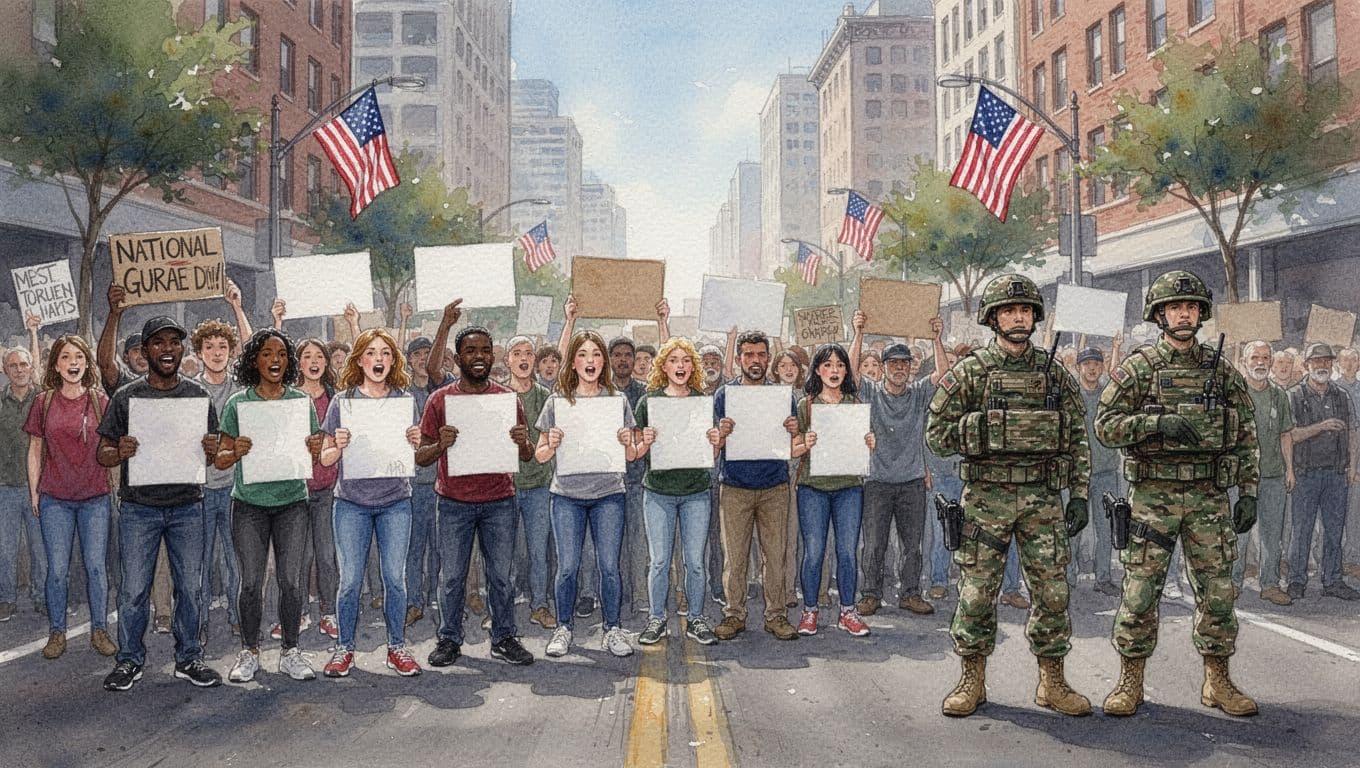
When National Guard and Marines enter a crowd
When the military shows up, the stakes change. In 2025, protests tied to ICE raids in Los Angeles saw National Guard and active-duty Marines guard federal buildings, and reports raised concerns about confusion and force. In 2026, people also watched Marines in major cities like Los Angeles and Washington, DC, as protests continued.
It helps to know the basic idea: you still have First Amendment rights to assemble, even if armed forces are nearby. However, the rules for who can do what can get blurry during federal involvement.
Watch for these red flags in crowd scenes:
- Lethal force used against peaceful protesters (or when no active threat exists).
- Sweeping arrests that ignore whether people committed any crime.
- Blockades that stop people from leaving safely.
- Uneven treatment where some people get pushed out, others get ignored.
If you want a reality check on what military units can and cannot do during protests, see what Marines and the National Guard can do. Also, if you’re tracking claims of abuse, Human Rights Watch on LA protesters offers a detailed look at force allegations.
Arrests for filming, and the right to document
Filming can feel risky, even when you’re just standing still. Still, in the U.S., courts and civil liberties groups have long treated recording as part of public oversight.
A strong rule of thumb is simple: if you can film without interfering, keep your distance and avoid physical contact. If officers threaten you because you recorded, treat that as a serious warning.
For clearer guidance, use ACLU on filming and documenting police and ACLU on protesters’ rights.
Immigration pressure: blocked asylum and reports of torture
Immigration rights violations often look like paperwork and delays, not dramatic violence. Still, in 2026, the news kept pointing to serious harm claims, including reports involving torture and abuse of migrants and efforts that can block asylum for people who seek protection.
A separate, heavy example comes from El Salvador deportations. Human rights reporting has described deported people facing arbitrary detention after returning. For one report summary, see HRW reporting on deported Salvadorans.
In these settings, your “red flag meter” should spike when you see:
- No clear access to legal help while decisions get made.
- Denials of asylum without a real chance to explain fear of harm.
- Threats or coercion that push people to sign away rights.
Bottom line: In protests and immigration cases, safety excuses can hide rights violations. Document what you can, ask for legal help, and watch for patterns, not one moment.
Spot It and Fight Back: Your Action Plan Step by Step
When your rights feel shaky, don’t freeze. Treat it like a fire drill, you move fast, stay calm, and do the next right thing. Your goal is simple: make it harder for the bad facts to disappear.
Document Everything and Stay Safe
First, focus on safety. Then document like you’re building a clear timeline for someone who was not there. If you can, film. If you can’t, write down details right after.
Start with what you can prove, not what you guess. The more specific your notes are, the more useful they become.
Use this quick flow while you’re still in control:
- Time: write the exact start time and how long it lasted.
- Names and roles: officer names, badge numbers, agency names, witness names.
- What happened: only facts, in order, with short lines.
- What you said: record key phrases, like “I do not consent.”
- What you saw: injuries, property damage, sudden changes in instructions.
- What you have: photos, video clips, texts, incident numbers, receipts.

If you’re documenting police or federal agents, keep your distance and avoid physical contact. Speak only as much as you must. Also, don’t argue in the moment. Save your energy for the record.
A good rule is: write now, and organize later. Then store everything in more than one place (for example, your phone plus a cloud folder), so you’re not stuck if one copy is lost.
If you want a plain guide on what to do when rights are on the line, use ACLU know your rights resources. Use the ideas as a safety compass, not as a substitute for legal help.
Get Expert Help and File Reports Fast
Next, move from documentation to support. Rights claims have deadlines, and waiting can shrink your options. So act quickly, even if you feel upset or unsure.
Start with the right channel based on the issue:
- Police, civil rights, or federal misconduct: submit a report to the Department of Justice through DOJ civil rights complaint intake.
- Workplace discrimination or retaliation: file with the EEOC using EEOC how to file a complaint.
- Immigration help: contact RAICES for guidance and referrals via RAICES contact and resources.
Meanwhile, don’t go it alone. Groups like Amnesty International often connect people to action steps and support networks. You can also find local orgs that match your city and case.
Here’s a simple checklist you can follow the same day:
- Save proof (video, photos, notes, names, times).
- Write a short timeline (5 to 10 bullet points).
- Assert calmly: “I do not consent.”
- Call for help from the right legal or civil rights route.
- File the report you can file today, not the one you wish you had.
Bottom line: Documentation gets you credibility, and fast reporting gets you traction.
Even when the process feels heavy, you’re not powerless. Across the U.S., people keep showing up, filming what they can, filing reports, and insisting that rights mean something. That trend matters, and your next step can be part of it.
Conclusion
If you’re trying to figure out how to know if your rights are being violated, start with one steady rule, know your basics and compare them to what’s happening in front of you. When a stop, search, job action, eviction, protest response, or data demand crosses the line, patterns matter more than one bad moment.
Then act fast. Document what you can, keep notes of names and times, and file the right report through the right channel. If you’re unsure about a situation, use the ACLU’s printable guidance and resources so you have your rights in reach before you need them.
Most importantly, keep your voice in the bigger process too, especially around elections. With civil rights and voting access on the ballot in the 2026 midterms, your next step can protect more than just one incident.
What will you save today, the rights checklist, a phone note with key steps, or the link to ACLU guidance for your area?