
You’re walking through your day, then it happens. A heated argument spills into the street, or you spot someone doing something clearly wrong nearby. Your brain freezes for a second, because you’re thinking, “If I act, could it get worse?”
That freeze is normal. Most people don’t want to become a victim, and they don’t want to guess wrong. Still, you do have options. When you respond with bystander intervention habits, you can reduce harm without playing hero.
The goal is simple: stay safe, act smart, then report the right way. That usually means (1) assessing danger, (2) stepping in only if it’s low-risk, (3) reporting to the right place, and (4) avoiding common mistakes that make things worse. Many training programs teach the “5 Ds” approach, which helps people choose a safer move in the moment.
And yes, you can help. In the US, Good Samaritan laws exist in every state (and DC) to encourage people to call for emergency help in good faith. Rules vary, so stay within reasonable, safe actions and call for help when you’re unsure.
Next, let’s focus on the one thing that matters most: your safety first.
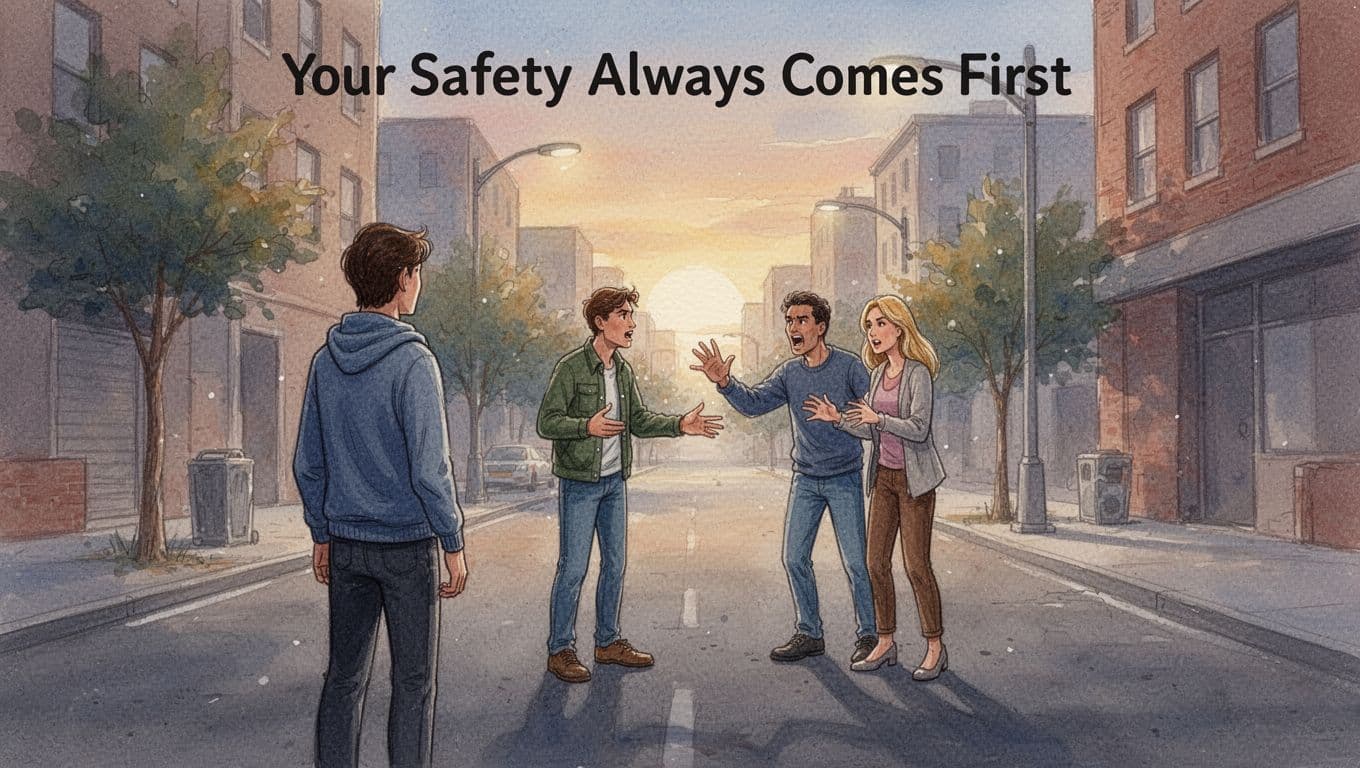
Your Safety Always Comes First
When someone breaks the law around you, your first job is not to solve it. Your first job is to avoid getting pulled into danger. Trust your gut. If something feels off, treat it like it’s dangerous until proven otherwise.
Start by checking what you can see from your current spot. Are people yelling, pushing, or blocking exits? Do you notice a weapon, or a body posture that looks ready to strike? Also consider the setting. A parking lot, a narrow hallway, or a crowded place can make it harder to step away quickly.
Most importantly, don’t rush toward the scene. In many incidents, the safest “action” is creating distance and getting help. Filming can help later, but it can also trap you in place. If you’re close enough to get hurt, step back first.
Here’s a quick scan you can do in your head:
- Distance: Can you move away without running through people?
- Safety cues: Do you see weapons, punches, or threats?
- Exit plan: Do you know where you’ll go if it escalates?
- Energy check: Is anyone still calm enough to talk?
- Help nearby: Is there security, staff, or other responsible adults?
Training programs for bystander intervention also stress a key idea: you often act indirectly first, then decide what to do next. If you freeze, that’s not failure. It’s your brain calculating risk. Take one small action that improves safety, then move on.
If you want a grounded explanation of the “5 Ds” used in many bystander programs, see The 5 D’s of Bystander Intervention – VAWnet. It’s a helpful reference point when you’re trying to choose a low-risk option.
Trust Your Gut and Spot Warning Signs
Look for signals that harm could happen fast. The signs aren’t always loud. Sometimes it’s the tone shift, the sudden closing in, or the way someone keeps getting in another person’s space.
Common warning signs include:
- aggressive talk paired with fast movement
- threats like “I’ll show you” or “I’m not going anywhere”
- someone grabbing wrists, clothing, or blocking a path
- rapid escalation after a person tries to leave
- groups forming, even if no one hits yet
If you notice these, pause and switch into “safe distance mode.” Quietly take note of details you can share later, like clothing, location, direction of travel, and any specific words that were said.
Also, don’t confront someone while you’re still deciding. First, observe. Then decide whether you can do something safe, like alerting staff or calling emergency services.
Know When to Keep Your Distance
Some situations are not for you to “handle.” Keep back when violence seems likely, when a crowd is involved, or when the person breaking the law seems unpredictable.
Examples where distance matters:
- you see a weapon or you’re unsure
- someone is chasing another person
- you hear threats or you see serious pushing
- a group is surrounding one person
- you can’t clearly exit the area
In those cases, your best move is to create space and bring in help. That might mean stepping behind a barrier, moving toward a safer public area, and calling 911. If you can safely notify someone nearby with authority, do that too.
And if you’re tempted to “just film it”? Step away from the risk first. Filming while standing close can put you in the same danger as the people being targeted.
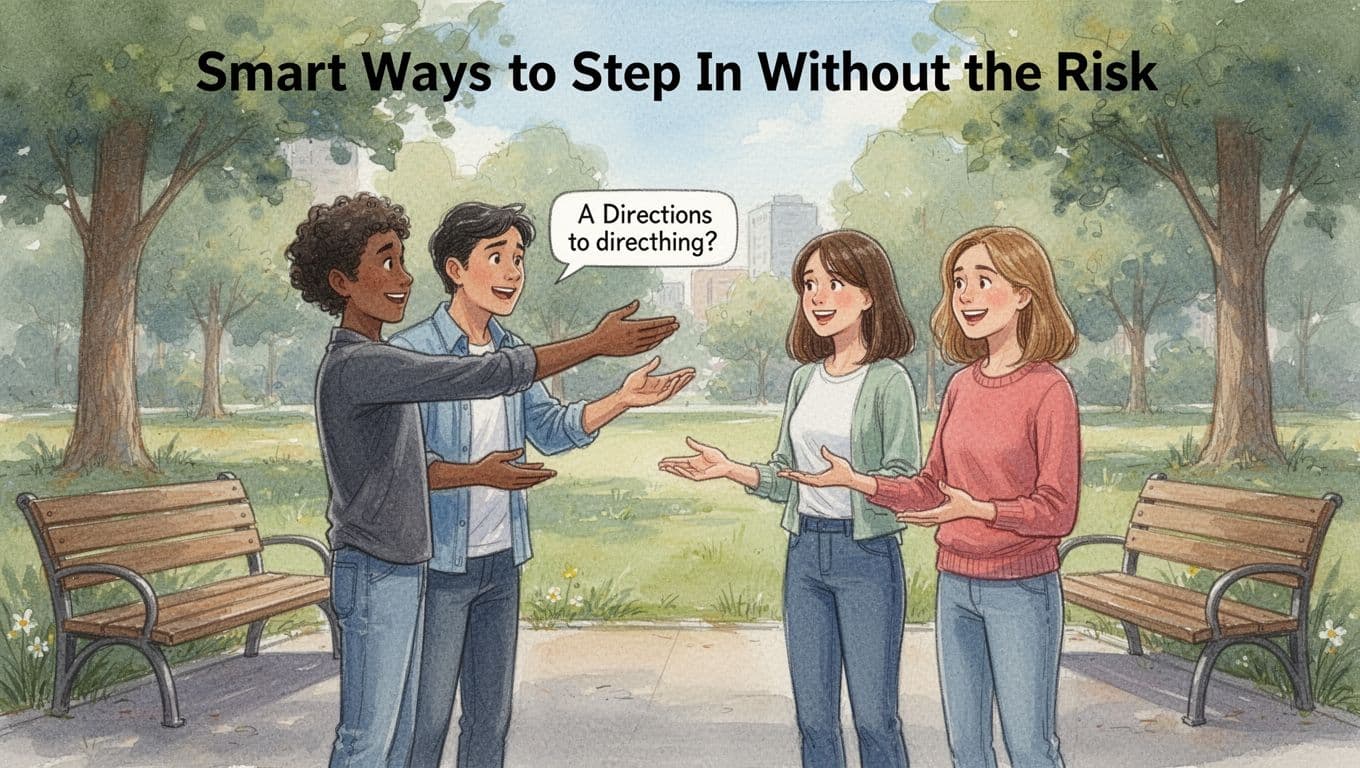
Smart Ways to Step In Without the Risk
Once you’ve checked your safety, you can choose a response that fits the moment. Many programs use the 5 Ds (Direct, Distract, Delegate, Document, Delay). In practice, “Delay” often means checking on the person later. Some people call that “Debrief,” which sounds more formal than it is. Either way, the idea stays the same: help in a way that won’t escalate danger.
Here’s the rule that keeps you safe: match the method to the risk level. If danger is high, choose indirect steps. If danger is low, you may use calm words.
Try Distracting to Break the Tension
Distracting can work when you can interrupt without challenging someone head-on. The goal is not to argue. The goal is to shift attention away from harm.
Use distraction like a gentle “interrupt button.” For example:
- If someone’s being harassed, ask something normal nearby: “Do you know where the bus stop is?”
- If an argument is heating up at a store, you can say, “Hey, I think you dropped your keys,” even if you’re just buying time.
- If you can do it safely, make a neutral offer like, “Let’s get a manager here,” instead of telling someone they’re wrong.
This can create a pause. That pause can give the targeted person a chance to move away.
Delegate to Trusted Help Nearby
Delegate means you bring in people trained or positioned to help. You don’t have to carry the whole situation.
Examples of delegation:
- Tell a nearby employee, teacher, coach, or security guard: “I need help. That looks like harassment.”
- In a workplace, alert a manager, HR rep, or on-site safety person.
- If you’re unsure, call a non-emergency line if there’s no immediate danger.
If you’re helping at a school or during harassment, organizations like The 5Ds of Bystander Intervention – Right To Be can help you understand what “safe intervention” looks like in real scenarios.
In higher-risk moments, delegation often means calling 911. If a crime is in progress and someone could get hurt, don’t negotiate. Get emergency help.
Use Direct, Document, or Debrief Only When It’s Safe
Direct means using calm words to stop harmful behavior. If you think it’s safe, you can try short phrases, like “Stop” or “Don’t touch them.” Keep your voice steady. Don’t insult the person. Don’t debate.
Document means capturing details without putting yourself in danger. This might be a quick photo from a safe distance or a brief note. If you’re filming, don’t block exits and don’t move closer to get a better shot.
Debrief (or “Delay,” in the 5 Ds) is what you do after the worst moment passes. Check on the person, offer to call them a ride, or ask if they need a witness statement. If they want help reporting, stay with them while they connect to the right service.
How and When to Report What You See
Reporting matters, even when you didn’t “stop” the crime yourself. When people report accurately, communities get safer. Also, officials can build a case faster when details show up early.
The big idea is to pick the correct channel based on risk.
- If someone’s in immediate danger, call emergency services.
- If harm already happened or the suspect is gone, use non-emergency options.
- For online abuse, use platform tools first, then report through the right law enforcement or victim services if needed.
If you’re worried about how to report, USAGov offers a clear starting point for what to contact and how to file. Use Report a crime | USAGov when you’re not sure which agency handles the issue.
Dial 911 for Real Danger
Call 911 when there’s real danger now. That includes active assaults, threats with weapons, serious fights, or situations where someone could get hurt quickly.
If you do call, these steps help:
- Give your location first. Street, building, nearest cross street, and any entrance details.
- Describe what you see now. Who is doing what, and what the target needs.
- Share key details. Clothing, approximate age, direction of travel, and whether anyone has a weapon.
- Answer questions calmly. Don’t guess if you don’t know.
- Stay on if safe. Otherwise, ask if the dispatcher wants you to move.
Also, if you’re calling for someone else, protect them. Don’t tell the attacker you’re calling. Move to a safer spot where you can talk freely.
For reporting that doesn’t need emergency response, use local police non-emergency lines, city portals, or anonymous tip services. If you’d rather not share your identity, WeTip is one option that accepts anonymous submissions. Use Submit a crime tip anonymously – WeTip if that fits your situation.
Handle These Common Situations Right
Not every lawbreaking moment looks the same. So instead of guessing, match your response to the situation type and risk level.
Below is a quick guide you can scan fast.
| Situation you witness | Best immediate move | After the moment passes |
|---|---|---|
| Street fight or assault | Get distance, call 911, delegate to nearby staff | Help identify what happened, offer support to the target |
| Harassment in public | Distract if safe, delegate to staff, check later | Stay nearby briefly, offer to help report |
| Medical emergency (unconscious, overdose) | Call 911, follow dispatcher steps | If trained, provide aid (within your skills) |
| Workplace threat (manager, coworkers, stalking) | Alert a supervisor/security, call non-emergency or 911 if danger | Document dates and details; report through policy |
| Immigration-related raid or detention | Note details safely, contact proper hotlines or legal aid | Support the person, if appropriate, without confronting officials |
| Online abuse or threats | Report to the platform, save evidence | If it’s credible or involves danger, report to law enforcement |
What If It’s a Fight or Assault?
First, keep your distance. Then call for help. If you can distract without crossing into danger, do it. But if someone is swinging, chasing, or cornering another person, do not move closer.
If you spot a clear “non-contact” way to help, choose that. For example, you can:
- yell for others to call 911
- step into view of a nearby security guard
- ask someone to call, while you back away
Also, be aware of the “bystander effect,” where people hesitate because other people are around. If you want a research-based explanation of why hesitation happens, read Bystander Effect | Psychology Today.
Medical Emergency on the Spot
Medical emergencies move fast. If someone is unconscious, not breathing normally, or overdosing, treat it as an emergency and call 911 immediately.
If you’re trained, start first aid or CPR, but only within your abilities. Many Good Samaritan laws protect reasonable help given in good faith during emergencies. Rules vary, so the safest path is: follow dispatcher instructions and don’t do risky things.
For overdose situations, Good Samaritan protections are especially relevant. For a state-by-state overview, see Good Samaritan Laws by State for Overdose Emergencies.
Steer Clear of These Bystander Mistakes
Even well-meaning people make errors under stress. These mistakes often come from fear, confusion, or a need to “do something.” Instead, focus on safety and reporting.
Here are the biggest pitfalls:
- Rushing in without a plan: You might put yourself where harm can reach you.
- Ignoring your instincts: If you feel unsafe, distance is still action.
- Only filming from too close: It can distract you, and it can make you a target.
- Staying silent when help is needed: Hesitation lets harm keep going.
- Over-engaging with the offender: Don’t argue, don’t escalate, and don’t play detective on the spot.
One hard truth: waiting for the “perfect” moment can be the wrong choice. If danger is real, act sooner. If danger isn’t clear, choose lower-risk moves like stepping back, alerting nearby staff, and calling for advice.
You can also learn from what you did after the fact. If the incident ends safely, take a moment to write down what you remember. Clear details help if you later file a report or give a statement.
Most importantly, don’t tell yourself you “failed” if you didn’t intervene directly. Sometimes the most helpful action is walking away safely and getting the right people there fast.
Conclusion
If someone breaks the law around you, your first move should be staying safe. Then you can choose a response that fits the risk, like distracting, delegating, or documenting from a safe distance.
When danger is real, report fast. When it’s not, use non-emergency channels and keep details accurate. Reporting helps communities act, even if you didn’t take control in the moment.
And remember the hook from the start, the moment you froze. You can still be an upstander without turning yourself into a target. Your best path is simple: trust your instincts, use the low-risk 5 Ds, then get the right help on the way.