Moving into a new apartment can feel exciting, then one line in the lease makes you stop cold. That’s where rental agreements matter. A rental agreement (often called a lease) is a contract between the landlord and you, and it spells out rent, rules, and each side’s duties.
When you understand the basics, you protect yourself. You also avoid common mix-ups, like deposit surprises or unclear move-out deadlines. Of course, laws can vary by state, so this guide focuses on US basics while keeping an eye on 2025 to 2026 trends, like tighter deposit rules and clearer guest or sublet terms.
Next, you’ll learn how lease types work, which clauses show up most often, and what tenant rights usually look like in day-to-day situations. Then we’ll cover practical details you can use before you sign, plus what to update as laws change.
Core Elements Every Rental Agreement Must Include
A rental agreement is more than a signature. It sets the rules for money, repairs, and everyday life. When the core terms are clear, fewer disputes pop up later, especially around rent due dates and move-out conditions.
Start by thinking of the lease like a “map.” Without the map, you still drive, but you might hit the wrong turn. With the map, both sides know what to do, and when to do it.
Here are the key components of rental agreements you should expect in a standard US residential lease. State rules vary, so always match the lease to your local law.
Standard Clauses That Set the Ground Rules
The standard clauses in rental agreements are the “house rules” written into a contract. They often cover rent changes, behavior expectations, and how the landlord can enter your home. These clauses protect both peace and property, because they spell out what happens before a problem turns into a fight.
One clause you’ll see deals with rent increases. Many states allow increases only under certain conditions (like notice rules or rent control limits). For example, your lease might say rent can increase at renewal with written notice at least 30 to 90 days before the new rate starts. If your state caps increases, the clause usually points to that limit.
Next, look at no-smoking and pet policies. These clauses often include fees, limits, or both. Real-life example: a lease might allow one small cat, but require a pet addendum and a monthly pet fee. If smoking is banned, the agreement may require smoke-free compliance in the unit and common areas, with violations treated as lease breaches.
Then, review quiet hours. This part helps prevent noise complaints that spiral. A common setup is quiet hours in the evening, like 10 PM to 7 AM. If you host late gatherings, this clause tells you where the boundary is.
Also check trash and waste rules. Landlords include details to keep pests away and avoid odors. For instance, a lease might require you to place bins out only on certain days, and to use designated trash chute areas.
Subletting is another big one. Many leases say you can’t sublet or add a roommate without landlord approval, often in writing. If you try to move your friend in “just temporarily,” the lease may require a new application or updated agreement first. This protects the landlord’s risk, like unpaid rent and screening standards.
Finally, there’s landlord entry. Most agreements require advance notice and only allow entry for specific reasons. Many leases require 24-hour notice for non-emergency visits, like repairs or inspections. If a maintenance issue pops up, the lease might allow quicker entry for emergencies, but still expects reasonable timing.
For a practical way to check clauses, use a tenant-focused review guide like Essential Lease Review Checklist for Tenants. It helps you spot rules that look normal but hide real consequences.

Before you sign, skim for the “when, how, and what if” language. Ask one question: What happens if I break this rule, even by accident? That single scan can save you from surprise fees, termination notices, or deposit disputes.
Fixed-Term Leases or Month-to-Month: Picking the Right Rental Type
Choosing between types of rental agreements often feels like choosing between two mindsets: “lock it in” or “keep an exit plan.” Most of the time, you’ll see two options for US residential rentals: a fixed-term lease (often 12 months) or a month-to-month rental agreement. The right fit depends on how stable you want your rent and how soon you might need to move.
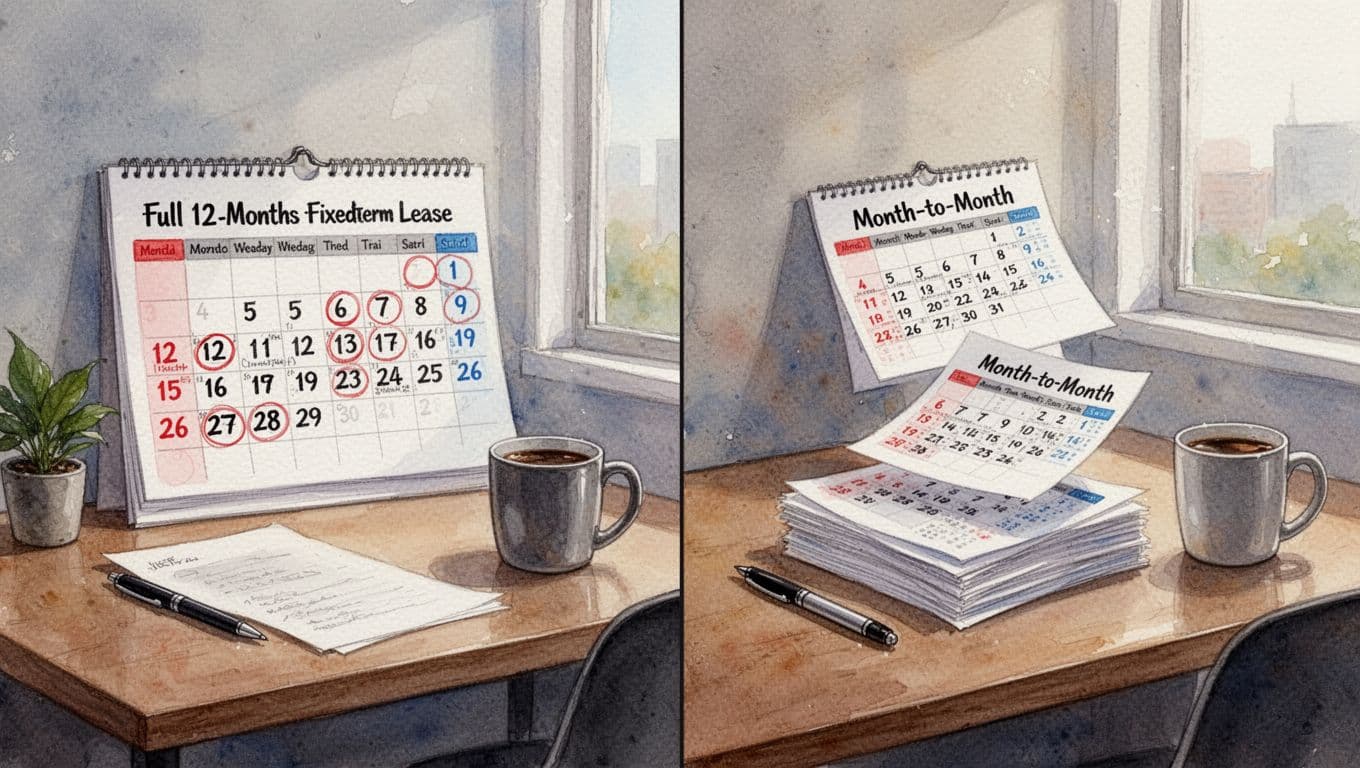
Fixed-term lease: set dates, usually 12 months
A fixed-term lease locks your tenancy for a set period, like 12 months. Rent and core rules usually stay the same until the lease ends, unless both sides agree to a change in writing. In other words, it’s like buying a bus pass for a year, not paying per ride.
Many leases also end “cleanly” with notice terms. That means the agreement either ends automatically on its end date, or it converts after expiration based on local rules. If you break the lease early, you may owe penalties, such as unpaid rent until a new tenant is found, or a defined early-termination fee.
In this setup, landlords get more certainty, too. However, tenant protections can still apply, especially around habitability and lawful eviction. If you want an easier way to compare the structure, see fixed-term vs month-to-month basics.
Month-to-month: renews each month
A month-to-month rental agreement typically renews automatically month by month. You can usually end it with proper written notice (often 30 days, but check your lease and state or local rules). This option acts like a flexible contract with a short leash on timing.
Rent can also change more often. Your landlord may raise rent at renewal with notice, so your monthly budget should assume some movement. If you value flexibility, this type can be ideal when your job, school timeline, or life plans are still shifting.
That’s why people often weigh lease vs rental agreement terms carefully. In daily talk, many use them interchangeably, but “lease” usually points to a set term, while “rental agreement” can describe the general arrangement. For a simple comparison, month-to-month vs yearly lease trade-offs can help you map the choice.
The part people miss: get it in writing
Always get the key promise in the lease (or a signed addendum). Oral promises are risky, especially for rent concessions, move-out rules, or “we’ll waive that fee” statements.
Bottom line: fixed-term leases favor stability, month-to-month favors flexibility. Choose based on how long you truly expect to stay.
Tenant Rights and Landlord Responsibilities You Need to Know
Tenant rights and landlord responsibilities work like a two-way seatbelt. You rely on it for safety, but it only works when both people do their part. When landlords skip key duties, homes can turn unsafe fast. When tenants ignore their side, landlords lose time and money, and disputes grow.
In 2026, many renters feel more attention on habits that affect daily life. Things like electronic deposit returns, opt-out internet, and appliance habitability rules in California keep showing up. Still, your best protection is simple: know what you must do, and know what your landlord must provide.
Flipping It: What Landlords Get and Must Do
On the landlord side, the “wins” are real, but they come with firm limits. Landlords can collect rent, set lease terms, and seek lawful eviction if you break the agreement. At the same time, they must keep the unit fit to live in and handle repairs on a reasonable timeline.
Here’s a clear view of what landlords typically get. These rights apply as long as they follow required notice rules and use the legal process.
- Collect rent and enforce lease terms: Landlords can charge rent due on time and apply late fees when allowed by your lease and state law.
- Enter the unit with notice: Most states require advance notice for non-emergency entry (repairs, inspections, showing the unit).
- Evict only through lawful process: They can’t kick you out on their own. They must file and follow court rules.
Now flip it to what landlords must do, because this is where tenant rights start to matter in day-to-day life.
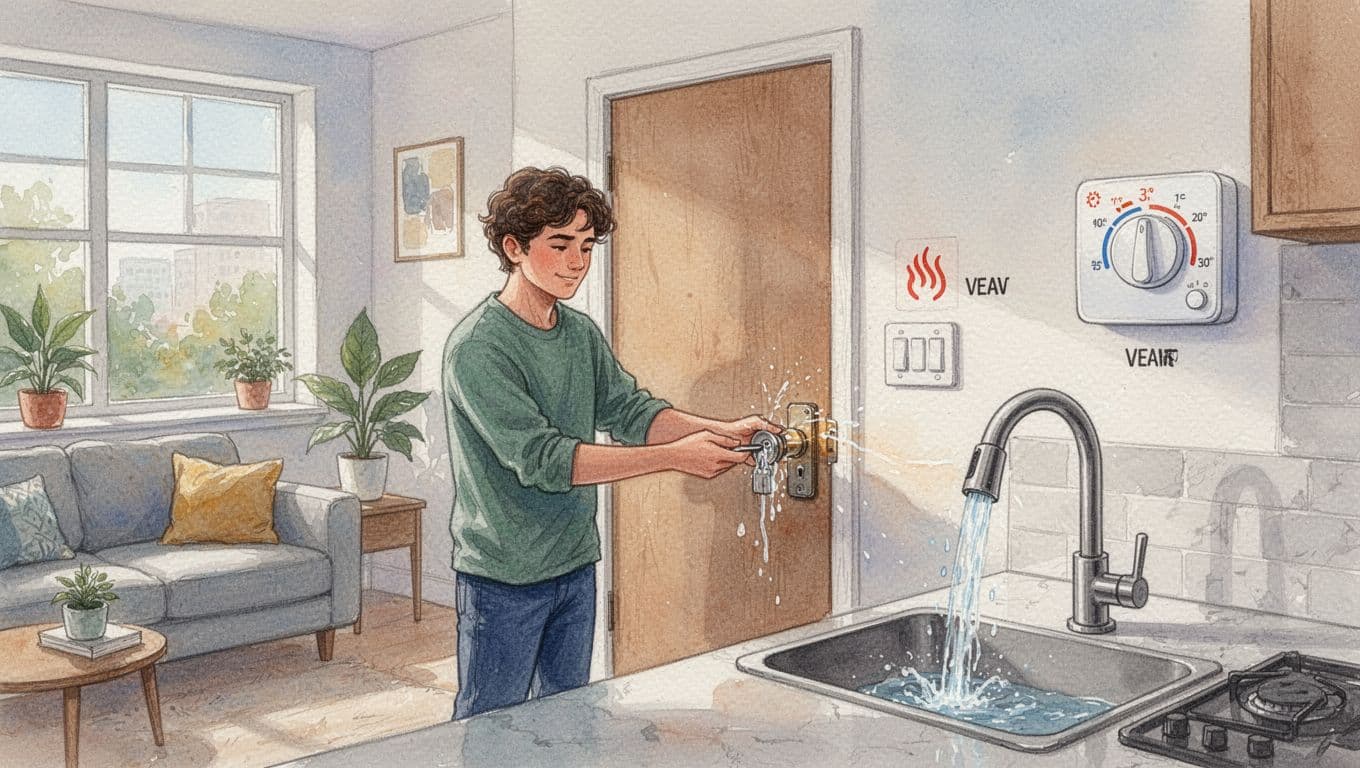
Tenant safety basics usually include:
- Heat, hot water, and running water (as required in your area).
- Working electrical and plumbing systems.
- Locks and reasonable security for doors and exterior access.
- Appliances that count as part of habitability, like working stoves and refrigerators in California starting in 2026.
In California, recent appliance habitability rules make this more concrete. Reporting a broken fridge or stove is not “extra,” it can be a habitability issue. For a plain-language look at the stove and fridge requirement, see New California law requires fridge and stove for all apartments.
Repairs also follow a basic expectation: landlords don’t get to ignore urgent issues while you wait. That includes problems like leaks, no heat, or electrical hazards. In plain terms, think of habitability like your apartment’s heartbeat. If it stops, someone has to respond, not just hope it fixes itself.
Gotcha to remember: self-help eviction (changing locks, shutting off utilities, or removing your belongings to force you out) is illegal in many states and heavily restricted in California. Legal eviction means notice, proper filings, and court process.
Repairs, notices, and fairness in real life
Fairness shows up in the small steps. A landlord who documents problems, schedules fixes quickly, and communicates entry times behaves differently than one who ghosts. Also, landlords generally must use proper reasons for actions that affect your tenancy, especially entry and eviction.
A good repair pattern often looks like this:
- You report the issue in writing when possible (email is fine).
- The landlord responds and schedules a visit promptly.
- Repairs happen within a reasonable time, based on the problem’s severity.
- Ongoing issues get tracked, so the fix actually lasts.
Electronic processes are changing too. In California, 2026 updates give more flexibility around security deposit refund handling, including agreements made electronically. The point is simple: follow the lawful workflow and keep records.
Also keep an eye on how landlords handle internet and fees. In California, new rules allow tenants to opt out of bulk services tied to the lease. If a landlord tries to force it, that can turn into a rent deduction or a dispute under the law. For a broader snapshot of what’s changing in 2026, you can review Housing, Other California Law Changes In 2026.
Finally, disasters can change the rent math. California includes rules that may pause or adjust rent during periods when a unit can’t be safely used. The theme is consistent: if habitability drops due to a disaster, tenants should not be forced to pay full rent as if nothing happened.
Why knowing your landlord’s duties protects you
When you understand what landlords must do, your requests get sharper. You can call for repairs with more clarity, ask about required notice, and challenge unfair actions using the lease and local law.
Here’s the advantage: you stop treating the lease like a mystery novel. Instead, you read it like an instruction manual. And when landlords follow the rules, you get a safer home, fewer surprises, and a smoother rental experience.
2026 Law Updates That Could Change Your Rental Game
Rental agreements basics stop mattering the moment money, repairs, and moving-out timelines collide. In March 2026, a few California changes can hit your monthly cost and your rights fast, especially around security deposits rental agreements, rent payment terms, and the eviction process. The best move is simple, check your lease, then confirm how state and local rules apply to your building.
What to watch in California (and why it affects deposits, rent, repairs, and eviction)
1) AB 628 (stove and refrigerator) affects habitability, fixes, and your leverage.
Starting January 1, 2026, landlords must provide and maintain a working stove and working refrigerator in covered rentals. If either stops working, you may treat it like more than an inconvenience. Repairs can become a habitability issue, and that can change how disputes play out. For a clear summary of the requirement, see California’s new mandatory appliances law (AB 628).
Here’s how this connects to money:
- If the appliance issue makes the unit unsafe to live in, you can push for faster fixes.
- If repairs drag, your lease and state law may give options like repair-and-deduct or rent withholding (where allowed).
- If the landlord later tries to frame issues as “your fault,” documentation becomes your shield.
2) Rent caps and just-cause evictions keep shaping eviction risk.
Even when a landlord wants to remove you, California rules often require just cause (especially after 12 months). Rent increases also face limits under AB 1482. If you want a plain look at how just-cause eviction rules work in 2026, check Understanding California’s just-cause eviction law (AB 1482).
Also note: some local changes can raise the bar for nonpayment evictions, including stricter thresholds in parts of Los Angeles County. For that kind of detail, see L.A. County raises eviction threshold for nonpayment.
3) Electronic refund processes, Social Security grace language, and opt-out services may appear in lease drafts.
You may see references to bills like AB 414, AB 246, and AB 1414 in landlord updates. However, those specifics can change based on bill text, amendments, and implementation dates. Treat any promise like an item on a grocery shelf, verify it in your state and local housing guidance before you rely on it.
Quick practical moves for 2026
Before a dispute starts, build a paper trail. For security deposits rental agreements, take move-in photos, and keep them organized by room. When you move out, send a dated message if you believe deductions are wrong. For rent payment terms, pay on time and read late-fee language closely, since grace periods and fee limits can matter. If you live in California, late fees and grace periods is a helpful starting point for how these charges are handled.
Finally, remember this about the eviction process: landlords generally must use court and proper notice. If they claim you should “just leave,” ask what legal process they’re using, and never ignore notices.
Pro Tips for Tenants and Landlords to Stay Out of Trouble
When you treat your lease like a shared set of rules, trouble stays smaller. These tips for rental agreements help both sides avoid the usual traps: unclear promises, sloppy documentation, and late responses that snowball.

Tenants: Do the boring stuff early
Tenants often get in trouble by “assuming” things are fine. Instead, act like a careful reporter. You want a paper trail for condition, payments, and requests.
- Read fully, photo condition: Take move-in photos/videos, including cabinets, floors, and fixtures. Save them in one folder.
- Pay provably: Use payment methods that leave a receipt trail. Keep confirmation emails and bank records.
- Know laws, not just the lease: State rules shape deposits, entry, and repairs. Your lease alone does not control everything.
- Write requests down: For repairs, send a clear message with dates, photos, and what you need.
- Watch move-out steps: Give required notice, clean to the standard your lease demands, and confirm the return process.
If you want a practical way to review lease terms, use a focused checklist like Essential Lease Review Checklist for Tenants.
Landlords: Reduce risk before it shows up
Landlords can prevent disputes with clean paperwork, fair screening, and transparent fees. Think of it like tightening a loose screw before it strips.
- Use updated forms: A lease should match your state rules and your property type.
- Screen fair and consistent: Apply the same criteria to every applicant. Avoid personal bias or “gut feel.”
- Disclose fees clearly: Spell out deposits, pet fees, and any recurring charges in writing.
- Document everything: Keep move-in condition proof and repair logs.
- Comply or use the right process: If something goes wrong, follow lawful steps, not shortcuts.
For tenant screening guidance, see How to Screen Tenants in 2026.
End with mutual respect, not “winning”
In the end, you both want the same thing: safe housing and predictable rules. When you communicate early and follow through, the relationship feels calmer for everyone.
Conclusion
If that first hook made you pause, the key takeaway is simple: the basics of rental agreements set the rules for rent, repairs, and move-out. When you read those terms closely and keep a record, surprises drop fast. You also gain clarity on what you can expect from your landlord, especially for habitability and lawful entry.
Next, stay sharp as rules change. In 2026, updates in areas like fee limits, appliance requirements, and security deposit handling can affect real costs and rights, so check your lease and local guidance before you rely on assumptions.
Before your next step, review your signed agreement (and any addenda), then save the key pages for later. What one clause would you most want to understand better before you sign again?